

Are project goals and project objectives both the same thing?
Yes? Then, why so?
If not, then again, why do you think these two terms are different?
Taking a broader outlook, most people tend to use the words ‘project goals’ and ‘project objectives’ interchangeably. But, there is a world of difference between the two. Let’s take an example:
“Our client needs us to build a new building on their campus for IT teams.”
“To achieve this, I need our teams to:
- Analyze the resources needed to get the job done
- Create blueprints for the building
- Get the material needed to construct the building
- Construct the building
- Ask for feedback…
…So, let’s get to work!”
Now, which one is a goal and which is the objective?
Confused?
In this chapter, we will elaborate on the differences between project goals and objectives. Here we go!
Difference Between Project Goals and Objectives: The Key Factors

In project management, goals and objectives are not just theoretical terms. They guide planning, execution, and performance tracking throughout a project lifecycle.
- Project goals define the overall outcome a project aims to achieve
- Project objectives define how that outcome will be achieved, through measurable and actionable steps
This distinction becomes especially important when managing scope, timelines, resources, and stakeholder expectations. In fact, most formal project management methodologies clearly separate goals from objectives to ensure clarity and control.
This brings us to one of the most widely used standards in project management.
| Key Factors | Project Goals | Project Objectives |
|---|---|---|
| Definition | Project goals can be defined as the end result a company wishes to achieve as a long-term gain. Project goals are ascertained on the basis of facts and figures. |
Project objectives can be defined as the concrete tasks that need to be executed in order to attain the end result. Project objectives are ascertained on the basis of ideas and innovative thoughts. |
| Time Duration | Project goals are long-term goals and tend to cover a time period of usually 5-10 years. | Project objectives are more concrete and specific. They cover short to mid-term achievements that usually need to be implemented on a daily basis. |
| Measurability | Project goals are difficult to measure, they do not have any criteria or set way to be measured properly. | Project objectives are relatively easy to measure. They have set criteria that managers can take into account to measure whether project objectives were met successfully. |
| Structure | Project goals lack structure as they define long-term gains for an organization. Therefore, they are generic, vague, and abstract in nature. | Project objectives are the opposite of project goals, since they are very specific in nature. Objectives are highly structured as they define the short or medium-term achievements of an organization. |
Turn project goals vs objectives into actionable plans with SMART goals. Step-by-step: How to Write SMART Goals.
How PMBOK Defines Project Goals and Objectives
According to the PMBOK (Project Management Body of Knowledge) framework, successful project execution starts with clarity. That clarity comes from defining project goals and objectives in a way that connects day-to-day work with real business outcomes.
In PMBOK-aligned project management, project goals sit at a higher level. They explain why the project exists in the first place. Goals are closely tied to organizational strategy, long-term business value, and stakeholder expectations. They help teams understand the bigger picture and stay focused on what truly matters.
Project objectives, on the other hand, translate those goals into action. PMBOK views objectives as the foundation for defining:
- Project scope
- Deliverables and milestones
- Success criteria and performance metrics
In simple terms:
- Goals answer why the project exists
- Objectives explain what needs to be done and how success will be measured
This distinction makes project execution smoother. When objectives are clearly defined, teams know exactly what is expected, progress becomes easier to track, and decision-making becomes faster. Most importantly, every task and milestone stays aligned with the original project goal, reducing confusion, scope creep, and missed expectations. For more, watch:
Examples of Project Goals and Objectives
Now that we have covered the basic differences between project management goals and project objectives, it is important to really back up our claims with examples. Here are a few examples of project goals and objectives that will make the concept absolutely clear:
| Project Goals | Project Objectives | |
|---|---|---|
| Reduce malnutrition among young children. | Provide relevant information to people regarding malnutrition, what needs to be done to curb it, and help people achieve this as a whole. | |
| Expand access to library and electronic information resources among the general public and staff members. | Replace the library’s web server and software. Then, form a web committee that consists of representatives from every department, develop marketing materials to promote the site, and aim to increase website traffic | |
| Strengthen food security in rural communities. | Build warehouses within a specific date and ensure every person in rural areas has access to food stored in a particular warehouse. Categorize warehouses and spread awareness about them. | |
| Reduce road traffic accidents. | Educate people and make sure they are aware of traffic rules. Deploy more police officers at signals to regulate traffic. Compare data and see whether this tactic reduces road accidents. | |
| Promote gender equality and encourage women empowerment. | Spread the word about feminism, spot woman-insulting behavior and speak up. Let women know there is nothing wrong in fighting what is right. | |
| Improve the quality of general education | Screen teachers diligently and administer tests to hire the right teacher for the job. Make sure teachers don’t only focus on bookish knowledge, but also have students’ best interests at heart and teach them life values as well. |
Project Objectives and the SMART Criteria
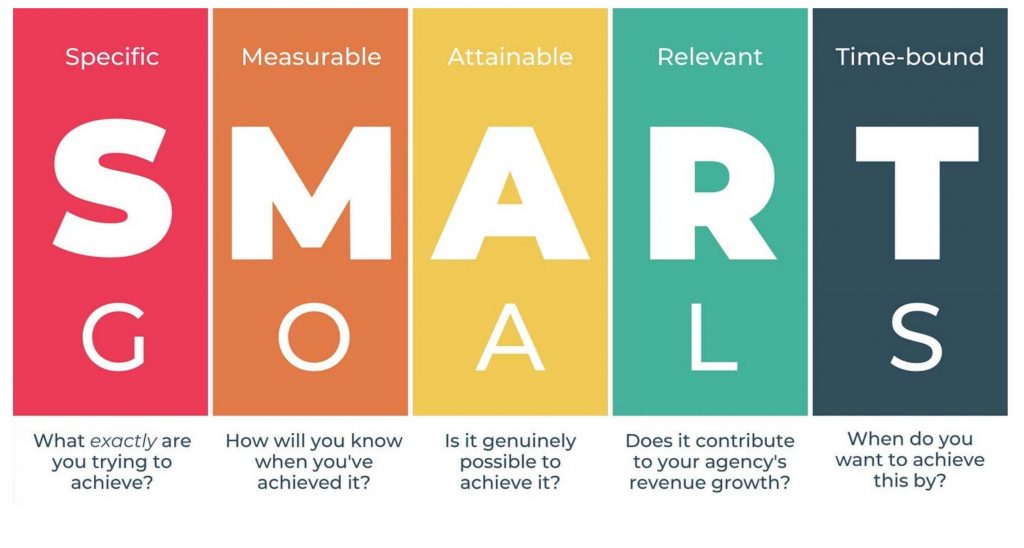
One reason project objectives are easier to measure than project goals is that they are often created using the SMART criteria.
SMART stands for:
- Specific – Clearly defines what needs to be done
- Measurable – Can be tracked using data or metrics
- Achievable – Realistic given available resources
- Relevant – Directly supports the project goal
- Time-bound – Has a defined deadline
Example of a Project Objective Using SMART
Project Goal: Improve customer satisfaction
Project Objective (SMART):
Reduce customer support response time from 24 hours to under 6 hours within the next 3 months.
This is a clear example of a project objective because it is measurable, time-bound, and directly tied to the project goal.
Turn project goals vs objectives into actionable plans with SMART goals. Step-by-step: How to Write SMART Goals.
Project Goals & Objectives: Know the Difference
So, now you know! The project goal is the complete picture that is achieved by completing different sub-goals or project objectives. Now, the example given in our introduction must be clear after understanding all the key points covered in this article.
So, among the two options given, what is the project goal, and what will be the objective?
Answer:
“What the client needs” is the project goal but the steps explained on “how the client needs can be achieved,” that combined is the project objective.
If you can answer this question without biting your nails or thinking twice – that’s great! You know the difference between project goals and objectives!
If you want to achieve your project goals and objectives without any fuss, ProProfs Project can be a good starting point. With clean visual dashboards, it’s easier to track who’s working on what and expedite project delivery.
Frequently Asked Questions

How do you define project goals and objectives?
Objectives can be defined as lower-level statements that define tangible, specific projects and deliverables. On the other hand, goals can be defined as high-level statements that define what a project is trying to achieve.
What is the difference between a project goal and objective?
There is a lot of difference between a project goal and a project objective. A project objective is short-term, practical achievements, whereas a project goal is long-term achievements a company wants to reach.
FREE. All Features. FOREVER!
Try our Forever FREE account with all premium features!