Whenever I work with teams on their Scrum and Agile adoption, I hear many of the same challenges. Sprints frequently spill over, requirements change mid-iteration, stakeholders demand firm dates despite iterative planning, and teams are juggling multiple tools or manual reports. I know how frustrating that can feel because these issues slow down delivery and dampen team morale.
That’s where Scrum statistics make a real difference. Instead of relying on guesswork or hype, you can use solid data to understand how top-performing companies run their Agile projects, where they invest, and which Scrum practices actually move the needle.
In this guide, I’ve gathered the most credible Scrum stats available today. Use them to sharpen your strategy, support your proposals, and build a Scrum practice that truly helps your team work smarter and deliver value faster.
Let’s get started!
Why Scrum Statistics Matter
When you look at Agile frameworks, everything can start to sound like buzzwords. Every team says they want to be “agile,” deliver faster, and respond to change. What actually cuts through the noise is data.
Scrum statistics show you what is really happening with Agile in the real world. Instead of guessing, you can see things like:
- How widely Scrum is adopted: Is Scrum truly as popular as it seems? (Spoiler: yes – you’ll see stats showing it’s the dominant agile approach worldwide.)
- What results teams get with Scrum: Rather than anecdotes, you’ll see metrics on success rates, quality improvements, and productivity gains from agile projects.
- Where companies invest in agility: Data shows if organizations are spending on training, tools, AI, or scaling frameworks – so you know where the trends are.
For you, this isn’t just “nice to know” – it’s about making smarter decisions with evidence. For example:
- If you’re fighting for budget, stats help you show leadership why investing in Scrum training, coaching, or tools will pay off. When you can cite that agile projects succeed at a higher rate than traditional ones, it strengthens your business case.
- If you’re choosing what to improve, numbers around usage and outcomes can guide your focus. Maybe you’ll see that 81% of Scrum teams do retrospectives every sprint – a reminder to never skip them because they correlate with higher quality and responsiveness.
- If you’re benchmarking your team, Scrum stats reveal whether you’re ahead of the curve or quietly lagging behind peers. Are most companies already using agile beyond IT? How does your defect rate or delivery speed compare to industry averages?
A modern Scrum practice now sits at the center of how you deliver projects, satisfy customers, and improve your processes. The statistics in this blog help you connect all three:
- Delivery and value – Are you using Scrum in a way that actually speeds up delivery and increases project success rates?
- Customer and stakeholder satisfaction – Are you leveraging agile to keep customers happier with higher-quality, more frequent releases?
- Team productivity and improvement – Are you empowering your team with Scrum (and maybe even AI assistance) to eliminate waste and continuously improve, or are you still doing things manually that others have automated?
As you go through the Scrum stats below, think in simple terms:
“Where are we already strong?” … “Where are we behind?” … “What is one change we can make this year that would have the biggest impact on our agility and results?”
Global Scrum Market Statistics
These stats give you a big-picture view of how widely Scrum and agile have spread and how much companies are investing in agility worldwide:
- 63% of Agile users report Team Scrum as their team-level methodology, keeping Scrum the most widely used team approach in the survey. (State of Agile)
- 19% of respondents use Scrum@Scale or Scrum of Scrums as their enterprise-level approach. (State of Agile)
- 4% of respondents report using enterprise Scrum (listed as part of the “remainder of the Agile landscape”). (State of Agile)
- The global Agile project management tools market reached $9.2 billion in 2024, driven mainly by Scrum adoption. (State of Agile)
- Enterprise Agile transformation services are projected to grow from $41.2 billion in 2024 to $96.3 billion by 2029. (The Business Research Company)
- 95% of professionals say Agile and Scrum are critical to their organization’s operational success. (Forrester)
- According to the 17th State of Agile Report, 28% of respondents reported that business operations teams have adopted Agile principles — indicating Agile (and often Scrum) is increasingly used outside traditional IT/development teams. (State of Agile)
Scrum Adoption & Usage Statistics
These stats show how organizations are actually using Scrum today – who’s using it, how popular it is relative to other methods, and where Agile practices are expanding:
- 58% of Agile teams use pure Scrum, without combining it with other frameworks. (Griffith)
- Scrum is used by 86% of software development teams and 63% of IT operations teams. (ElectroIQ)
- 17% of marketing teams have adopted Agile practices — which includes Scrum and other Agile frameworks being used in marketing workflows. (State of Agile)
- 65% of organizations report using a scaled Agile framework for coordinating Agile across multiple teams — with SAFe being the most prominent of these frameworks. (State of Agile)
- SAFe is the most used scaling approach, adopted by 37% of large Scrum organizations. (Agilemania)
- 81% of Scrum teams conduct retrospectives after every sprint, supporting continuous improvement. (Nimblework)
- 86% of Scrum teams hold sprint planning meetings for every iteration. (Scrum.org)
- 90% of Scrum teams use two-week sprints or shorter. (Scrum.ai)
Scrum Team Performance & Delivery Statistics
These statistics highlight how Scrum impacts real team performance, from delivery speed to meeting deadlines and sprint commitments. They show whether Scrum actually helps teams ship work more predictably and efficiently in day-to-day execution.
- Analysis of over 1,300 software projects found Agile methods achieved 27% higher productivity and 30% less schedule slip compared to traditional waterfall approaches — illustrating how iterative frameworks like Scrum can accelerate delivery. (McKinsey)
- Scrum adoption leads to a 50% reduction in defects due to early testing and feedback. (IBM)
- Scrum teams report 27% higher productivity compared to non-Agile teams. (McKinsey)
- 71% of organizations report using Agile in their SDLC, with many noting improved delivery outcomes and closer alignment to business goals compared to traditional methods. (Business Wire)
- Scrum teams reduce time-to-market by up to 50% for digital products. (McKinsey)
- 60% of Scrum teams release working software every two weeks or faster. (State of Agile)
- 17% of Agile teams reported reduced rework and increased efficiency thanks to regular reviews and iterative feedback loops in Scrum or similar Agile practices. (Parabol)
- 59% of teams report stronger collaboration between departments after adopting Agile practices like Scrum. (Zealous)
Scrum ROI & Business Impact Statistics
Ultimately, leaders want to know: does adopting Scrum and Agile methods actually make a difference? The following stats highlight the tangible benefits teams are seeing – from higher success rates to quality, speed, and morale improvements:
- Research shows that organizations undergoing successful agile transformations—including Scrum practices—see customer satisfaction scores increase by 10–30 points. (McKinsey)
- Enterprise-wide agile transformations show 20% to 30% financial performance improvement (cost savings). (McKinsey)
- 70% of respondents said Agile positively impacted “Visibility.”. (Itnove)
- Scrum adoption improves decision-making speed by 20% across delivery teams. (McKinsey)
- 85% of Scrum teams say their work life improved after adopting Scrum. (Scrum Alliance)
- 59% of respondents said Agile positively impacted “Team morale.” (Itnove)
- Agile transformations show 30% to 50% operational performance improvement. (McKinsey)
Scrum Challenges & Failure Statistics
Adopting Scrum isn’t all sunshine and rainbows – many organizations struggle to get the full benefits. It’s important to know where agile adoptions hit roadblocks. These stats shed light on the common challenges and why some agile transformations falter:
- 41% say “Not enough leadership participation” is a barrier to Agile adoption/scaling. (Itnove)
- 46% report “inconsistent processes and practices across teams” as a key barrier to Agile adoption and scaling. (Website Files)
- 43% cite the “pervasiveness of traditional development methods” as a significant barrier, which often pulls teams back toward Waterfall behaviors. (Website Files)
- 35% say “lack of business/customer/product involvement” is a significant barrier, which commonly shows up as unclear priorities and weak product direction. (Website Files)
- 53% report “organizational culture at odds with Agile values” as one of the top challenges to adopting and scaling Agile. (Bucknell University)
- Only 4% of companies had completed an enterprise-wide agile transformation (with 37% saying transformations were in progress), showing how hard scaling Agile can be. (McKinsey)
- 46% cite “general organizational resistance to change” as a top challenge to adopting and scaling Agile. (Bucknell University)
Scrum Roles & Certification Statistics
These statistics focus on the people behind Scrum, including common roles, responsibilities, and certification trends. They show how teams are structured, who leads Scrum initiatives, and how organizations invest in Scrum skills.
- 739,509 people hold the Professional Scrum Master I (PSM I) certification (data last updated Dec 1, 2025). (Scrum.org)
- Over 1.14 million Professional Scrum certifications are held globally. (Scrum.org)
- The Scrum Alliance community includes 1.5+ million certified professionals worldwide. (Scrum Alliance)
- Over 2 million professionals have validated their expertise through SAFe certification and training. (Scaled Agile)
- Scaled Agile reports 83% of open SAFe-related roles require or prefer certification. (Scaled Agile)
- 256,457 people hold the Professional Scrum Product Owner I (PSPO I) certification (data last updated Dec 1, 2025). (Scrum.org)
Scrum Tools, Technology & AI Statistics
These statistics highlight the tools and technologies that support Scrum teams today, including how software, automation, and AI are being used in Agile workflows. They show how teams rely on technology to plan sprints, track work, and improve delivery efficiency.
- 81% of respondents would recommend Atlassian Jira Software based on their experience with agile planning and delivery tools. (Website Files)
- 66% of respondents use spreadsheets and 67% use task boards as agile planning and delivery tools. (Website Files)
- 81% of respondents worked hybrid or fully remote (56% hybrid + 25% fully remote), showing how digital-first tooling has become the default. (Website Files)
- Atlassian says 99% of customers who were previously eligible to buy Server have chosen Cloud or Data Center instead (a strong proxy for cloud-first work management tooling). (Atlassian)
- 85% of developers regularly use AI tools for coding and development (and 62% rely on at least one AI coding assistant/agent/editor). (Jefbrains)
- In a controlled experiment, developers using GitHub Copilot completed tasks 55% faster than those without it. (Github)
- 75% of enterprise software engineers will use AI code assistants by 2028. (Gartner)
Future of Scrum: Trends to Watch in 2026 & Beyond
These statistics explore how Scrum is evolving as teams, tools, and ways of working change. They highlight emerging trends, new practices, and where Scrum is likely headed in 2026 and beyond.
- 84% of organizations now report AI adoption in Agile, up from 2023, showing AI is becoming a standard part of how Agile and Scrum teams plan and deliver work. (Business Wire)
- By 2028, 90% of enterprise software engineers are expected to use AI code assistants, up from less than 14% in early 2024, which will directly reshape sprint execution and delivery capacity. (Gartner)
- By 2028, 33% of enterprise software applications will include agentic AI, up from less than 1% in 2024, which will change how teams automate backlog-to-release workflows. (Gartner)
- 86% of marketing organizations planned to transition some or all of their teams to Agile ways of working, reinforcing Scrum-style delivery beyond product and IT. (Agile Sherpas)
- McKinsey’s survey respondents say 68% of employees should be working in Agile ways, vs 44% today, signaling continued scaling of Agile operating models across the business. (McKinsey)
How to Use These Scrum Statistics to Improve Your Strategy
Seeing the numbers is one thing. Knowing what to do with them is where the real value lies. Here’s how you can turn these Scrum statistics into practical actions for your 2026 strategy.
1. Use Market Growth Stats to Justify Investing in Agility
Scrum and Agile are clearly accelerating, not slowing down. Strong adoption and market growth mean your competitors are improving how they deliver products.
What this means for you:
- You are not too late. Even if Scrum adoption has been slow, the market is still growing, and there is time to catch up if you act now.
- Competitors are investing. As more companies spend on Agile tools, coaching, and transformation, slow delivery can quickly become a disadvantage.
- Think long-term. Scrum is not a one-time rollout. Use growth stats to support a multi-year Agile roadmap that includes tools, training, and AI-driven improvements.
A simple exercise is to ask, “If Agile keeps growing at this pace, what do we need to build now so our Scrum practice is strong in two to three years?”
2. Use Adoption Stats to Benchmark Where You Stand
Scrum statistics are a great mirror for your current maturity.
Start with a few practical checks:
- Where is Scrum actually used today? If it lives only in engineering, remember that marketing, operations, and other teams are catching up.
- Are you running the core Scrum rituals consistently? High-performing teams almost always do sprint planning, reviews, and retrospectives every cycle.
- How do your quality and delivery speed compare? If your defect rates or release cycles are far from industry benchmarks, that’s a clear signal to improve processes or tooling.
- Does leadership truly support Scrum? Many transformations stall because leadership support is passive, not active.
Focus first on the biggest gaps between your current state and what successful Scrum teams are already doing.
3. Use ROI and Performance Stats to Build a Strong Business Case
Statistics make conversations with leadership easier.
Here’s how to use them effectively:
- Show expected returns. Agile projects succeed more often and deliver faster. Even small improvements can translate into major cost savings or faster launches.
- Highlight the risk of doing nothing. Lower success rates, more defects, and slower delivery are real costs of sticking with old ways of working.
- Tie stats to specific requests. Whether it’s better tools, Scrum training, or Agile coaching, connect each request directly to measurable outcomes.
- Paint a before-and-after picture. Manual processes, slow releases, and quality issues on one side. Faster delivery, better customer feedback, and higher predictability on the other.
When you connect Scrum stats to outcomes leaders care about like revenue, cost, risk, and customer satisfaction, decisions become much easier.
Bring it all together
By combining market growth, adoption benchmarks, and ROI data, you can build a Scrum strategy based on evidence, not instinct. These statistics help answer three critical questions:
- Is Scrum worth investing in?
- Where should we improve first?
- What changes will make the biggest impact this year?
Use the data to create a clear narrative for change. The market is moving forward, others are seeing results, and this is how your team can use Scrum to deliver better outcomes.
Future of Scrum-Trends to Watch
If you zoom out from the data, a few clear trends show where Scrum is heading next. This isn’t about buzzwords. It’s about how teams will actually work and win in the coming years.
1. AI Becomes a Quiet Part of the Scrum Team
AI is moving from “nice to have” to everyday support in Scrum teams. Planning, estimation, testing, and reporting will increasingly be assisted by AI. Instead of replacing people, AI will remove repetitive work and surface insights faster.
For you, this means starting small. Use AI where it saves time, like backlog refinement, sprint analysis, or risk detection. Soon, working with AI in Scrum will feel as normal as using CI/CD pipelines.
2. Scrum Spreads Beyond IT Into the Whole Organization
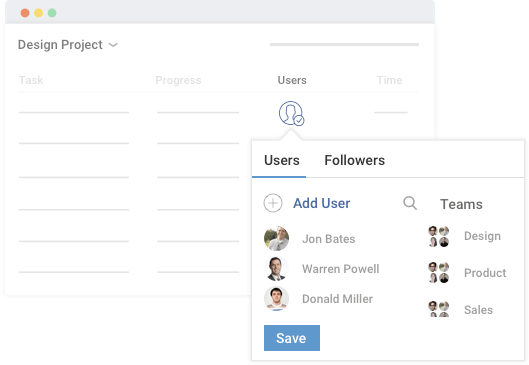
Scrum is no longer limited to software teams. Marketing, operations, HR, and leadership teams are adopting Agile ways of working. Scrum is evolving into a shared operating model for how work gets planned, reviewed, and improved across the company.
This shift requires breaking silos. Scrum Masters may take on broader coaching roles, and dashboards will connect team work to business goals. Organizations that apply Scrum company-wide will adapt faster than those where agility lives only in IT.
3. Remote and Hybrid Scrum Becomes Standard
Remote and hybrid work are now permanent for many teams. Scrum practices will continue to adapt with better collaboration tools, more async communication, and stronger focus on inclusion in meetings.
For Scrum Masters, facilitation and team connection become even more important. Teams that design clear remote-friendly norms will often outperform fully office-based teams by tapping into global talent and flexible work patterns.
4. Sustainable Pace and Team Well-Being Matter More
As Scrum matures, teams are realizing that speed alone is not enough. Burnout hurts quality and retention. Future Scrum practices will emphasize sustainable pace, team health, and psychological safety.
Expect retrospectives to focus more on workload and stress, not just process fixes. Happy, balanced teams consistently deliver better results, and more organizations are treating this as a performance priority, not a “soft” issue.
5. Scrum Becomes More Flexible and Customized
While Scrum remains dominant, many teams are adapting it to fit their context. Mixing Scrum with Kanban, DevOps, or other practices is becoming common.
The focus is shifting from strict rule-following to principles. As long as teams deliver value, inspect results, and adapt, they are practicing Agile effectively. Future Scrum Masters will act more as coaches and experiment facilitators than process enforcers.
6. Simplicity Beats Process Overload
After years of adding tools and ceremonies, many teams are simplifying. Leaner backlogs, fewer meetings, and clearer workflows are replacing heavy frameworks.
The trend is a return to Agile fundamentals: small teams, fast feedback, and working outcomes. Teams that remove unnecessary complexity will move faster and adopt Scrum more successfully.
Use Scrum Statistics to Build a Stronger Strategy
The Scrum statistics in this guide make one thing clear. Scrum is no longer just a delivery framework for software teams. It plays a direct role in how organizations move faster, manage change, and stay competitive. With clear evidence around ROI, delivery speed, and team performance, Scrum decisions today have a real impact on business outcomes tomorrow.
To get the most value, focus on three things. First, leadership alignment. Scrum works best when leaders understand it and actively support it. Second, continuous learning. Teams that invest in retrospectives, training, and improvement cycles consistently perform better over time. Third, practical leverage. This means using the right mix of tools and practices to reduce manual effort, improve visibility, and keep teams focused on delivering value instead of managing overhead.
This is also a good moment to look at whether your current setup actually supports how your Scrum teams work day to day. Many teams simplify their stack as they mature, choosing tools that make sprint planning, tracking, and collaboration easier without adding complexity. Solutions like ProProfs Project often fit naturally into this stage because they keep Scrum workflows clear and accessible. When your tools support your process instead of getting in the way, Scrum becomes easier to follow, easier to scale, and far more effective for both teams and customers.
Frequently Asked Questions

Why should businesses pay attention to Scrum statistics?
Scrum statistics help businesses make informed decisions instead of relying on assumptions. They show how peers use Scrum, what outcomes they achieve, and where investments pay off. This makes it easier to justify process changes, set realistic expectations, and prioritize improvements that actually impact delivery and team performance.
How accurate are Scrum statistics?
The accuracy of Scrum statistics depends on the source. Data from research firms, analyst reports, and large industry surveys is generally reliable because it’s based on broad samples. While no statistic guarantees the same results everywhere, these numbers offer useful direction for planning and benchmarking Scrum practices.
How often do Scrum trends change?
Scrum trends evolve gradually rather than overnight. Core practices stay stable, but tools, adoption patterns, and supporting technologies change year to year. Reviewing updated Scrum statistics annually helps teams stay aligned with industry standards, spot emerging practices early, and adjust their Scrum strategy as needs evolve.
FREE. All Features. FOREVER!
Try our Forever FREE account with all premium features!