When was the last time you completed a project as planned without any changes in between?
Hard to remember, right? Projects almost never go exactly as planned. I’ve led enough projects to know that requirements shift, timelines slip, and “small requests” can quietly turn into big scope changes. That’s why project change management matters. It gives you a clear, repeatable way to adapt without losing control of delivery.
Here’s a simple example: You’re building a software product with a solid roadmap, and halfway through, a key stakeholder wants an extra feature before launch. Without a process, the team scrambles, and deadlines start wobbling. With the right change approach, you capture the request, assess impact, get a decision, and update the plan so everyone stays aligned.
In this guide, I’ll show you exactly how I handle change in real projects, step by step. You’ll get practical examples, copy-friendly templates, and a simple framework you can use right away to keep projects moving forward, even when plans change.
What Is Project Change Management?
Project change management is the structured way to handle changes that come up during a project, whether that change touches scope, timeline, budget, resources, or even the final deliverable.
Because let’s be real, projects do not run in a straight line. A stakeholder asks for “one small tweak.” A dependency slips. A legal or security review adds a new requirement. A customer insight changes priorities. None of that is unusual.
What matters is how you respond.
Project change management makes sure every change request follows a clear path, so the team stays flexible without letting the project drift.
Here’s what it helps you do:
- Document changes: Instead of changes living in DMs, hallway chats, or “just do it,” you capture what’s being requested, why it matters, and what success looks like.
- Evaluate impact: You assess what the change will affect, like timeline, cost, effort, quality, risks, and downstream dependencies. This prevents surprise delays later.
- Get the right approvals: Not every change needs a committee, but every change should have an owner who decides. A simple approval flow keeps decisions transparent and prevents scope creep.
- Implement smoothly: Once approved, the team updates the plan, communicates the change, assigns responsibilities, and adjusts timelines or resources so execution stays coordinated.
- Sustain the change: This is the part many teams skip. You make sure the change is actually adopted and reflected in documentation, workflows, handoffs, and stakeholder expectations.
So if you’re asking, “What is project change management?” here’s the simplest answer:
It’s the process that helps teams manage change without chaos, delays, or confusion. Well, based on what I learned from industry experts (project managers, team leaders, managers), they prefer getting a project management system.
Why Does Change Management Matter in Project Management Today?
Change is no longer occasional. It’s constant. And even solid project plans get disrupted when priorities shift, budgets change, or stakeholders ask for adjustments mid-way.
Across industries, teams are running into situations like:
- IT companies switching tools due to rising costs
- ERP teams struggling with manual resource planning in spreadsheets
- Marketing teams losing track of tasks across chats and email threads
- Nonprofits needing collaboration with external consultants
- Manufacturing operations requiring stricter accountability and deadlines
In all these cases, the core need is the same: visibility, alignment, and structured execution when things shift.
A strong change project management approach helps you:
- Reduce disruption
- Prevent scope creep
- Maintain stakeholder trust
- Avoid rework
- Protect team morale
The result is simple. You can deliver projects successfully even when plans evolve, without the chaos that usually comes with change.
Change Management vs Project Management: What’s the Difference?
People often mix up change management vs project management because they work closely together. But they solve different problems. While one focuses on delivering the plan, the other focuses on adapting when the plan needs to change.
| Aspect | Project Management | Change Management |
|---|---|---|
| Primary goal | Deliver the original plan successfully | Adjust the plan when reality changes |
| Focus area | Tasks, timelines, budgets, resources | People, expectations, communication, adoption |
| Core activities | Assign work, track milestones, manage dependencies | Manage resistance, align stakeholders, reinforce new ways of working |
| Success looks like | Project completed on time, within scope and budget | Change accepted, adopted, and sustained over time |
| Common tools | Project plans, schedules, status reports | Communication plans, training, feedback loops, stakeholder alignment |
Think of it like this: project management builds the roadmap, while change management helps you navigate detours. Both are essential for long-term project success.
Real-Life Examples of Change Requests in Projects
To make this practical, here are a few real scenarios that show what change requests look like in day-to-day project work, and why having a structured process matters.
Example 1: Client Scope Change (IT Services)
A US-based client says mid-project:
“Can we add role-based dashboards before launch?”
On paper, it sounds small. In reality, it can affect UI design, access rules, data logic, testing, and even documentation. Without project change management, teams often say yes in a hurry and absorb the extra work quietly. That’s when deadlines start slipping and quality gets rushed.
With project change management, you keep things controlled:
- Log the request with clear requirements
- Assess impact on timeline, effort, cost, and risks
- Approve it, defer it to a later phase, or propose an alternative
- Update timelines, responsibilities, and stakeholder expectations
This keeps the client happy and protects the team from hidden scope creep.
Example 2: Internal Priority Shift (Marketing Team)
Leadership suddenly decides:
“This campaign must go live next week.”
Now the work is not just “move the date.” The team may need to pause other campaigns, pull in designers or copywriters, and change approval timelines. Without structure, this turns into last-minute chaos and people end up working late nights.
Change management helps you shift priorities without panic by:
- Resetting the plan openly instead of informally
- Clarifying what gets deprioritized to make space
- Communicating new timelines and owners across the team
- Keeping workload realistic so the team can deliver without burnout
Example 3: Change Fatigue Across Departments (Manufacturing Ops)
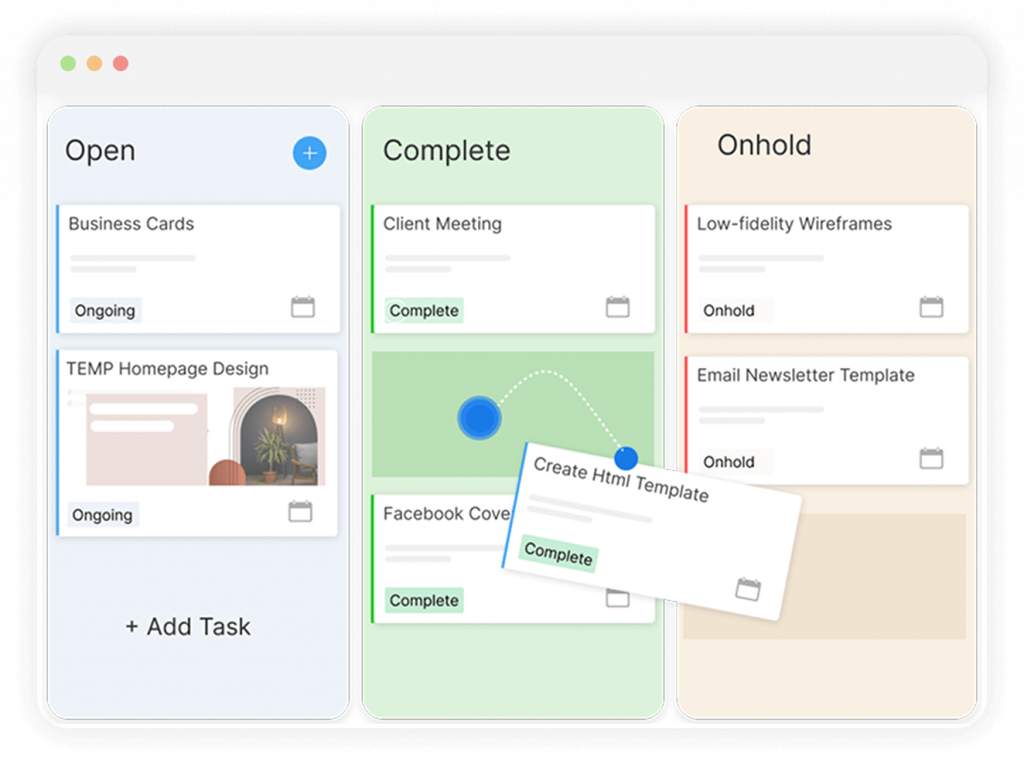
A company rolls out new workflows across multiple departments. The change is “live,” but adoption is uneven. Some teams follow the new process, others stick to old habits. Employees feel overwhelmed, deadlines slip, and accountability drops.
This is where sustaining change matters more than launching it. A project can technically be completed, but if people do not adopt the new workflow, the business impact never shows up.
Project change management supports continuity by:
- Reinforcing the change through training and clear SOPs
- Setting feedback loops to catch friction early
- Updating documentation and handoffs so the change sticks
- Tracking adoption, not just rollout completion
In short, change requests are normal. The difference is whether they happen as uncontrolled surprises or as structured decisions your team can handle confidently.
The Change Management Process in Project Management (4-Step Framework)
Most high-ranking guides follow a simple structure: Prepare → Plan → Implement → Sustain.
Here’s a practical breakdown you can actually use in real projects.
Step 1: Prepare for Change (Build Awareness Early)
Preparation is the foundation of the change management process in project management. Before you act on a request, get clear on what’s changing and why it’s coming up now.
Action steps:
- Identify the source of the change request
- Define what will be impacted (scope, budget, timeline)
- Do a quick impact and risk check
- Communicate early to avoid surprises
Common pain point: Misaligned expectations
Stakeholders often say, “It’s just a small change.” But small changes stack up fast. Preparation helps you catch hidden scope creep before it becomes a deadline problem.
Quick checklist:
- What exactly is changing?
- Why is it needed now?
- Who will be affected?
- What happens if we don’t implement it?
Step 2: Plan the Change (Create a Change Management Plan in Project Management)
Once a change is validated, you need a structured plan. This is where your change management plan in project management becomes essential. It turns the request into an executable update, not a vague “we’ll figure it out.”
What a strong plan includes:
- Updated objectives
- Roles and responsibilities
- Revised timelines or milestones
- Communication plan
- Training or support needs
Common pain point: Resistance from senior leaders
Leadership pushback usually shows up when costs go up, deadlines shift, or accountability becomes more visible. Planning works best when stakeholder alignment happens early, not at the final approval step.
Mini change planning template:
- Change title:
- Reason for change:
- Impact summary:
- Approved by:
- New timeline:
- Owners:
Step 3: Implement Change (Execute Without Confusion)
Implementation is where most projects struggle because the change gets introduced, but execution stays messy. The goal here is simple: make sure everyone knows what’s different, who owns what, and what the new expectations are.
Action steps:
- Assign updated tasks clearly
- Adjust workflows and dependencies
- Provide training if tools or processes change
- Track progress using KPIs
Common pain point: Communication overload
When changes are managed through email threads, chat messages, and spreadsheets, tasks get missed, and confusion grows. A centralized system cuts noise and keeps execution clean.
Step 4: Sustain Change (Make It Stick)
Most organizations implement change. Very few sustain it. This step ensures teams don’t revert to old habits once the “launch moment” is over.
Action steps:
- Collect feedback after rollout
- Review outcomes against original goals
- Reinforce change through reporting and reminders
- Document learnings for future projects
Common pain point: Change fatigue
When teams face constant change, they disengage. Sustaining change is about creating stability and clarity, not adding more pressure.
What Are the Benefits of Project Change Management?
When you apply Change Management in Project Management correctly, you unlock benefits beyond just handling updates. You build a repeatable way to stay in control when priorities shift, requirements evolve, or timelines move.
1. Higher Project Success Rates
Changes get reviewed, approved, and planned instead of quietly absorbed. That keeps scope, schedule, and quality from drifting.
2. Better Stakeholder Trust and Alignment
Decisions stay visible. People know what changed, why it changed, who approved it, and what happens next. Fewer surprises, fewer last-minute escalations.
3. Less Rework and Miscommunication
Clear change documentation reduces back-and-forth and prevents teams from building the wrong thing or rebuilding work due to unclear expectations.
4. Smarter Resource Allocation
You can reassess workload and reassign ownership based on impact. This prevents overloading the same people and makes delivery more realistic.
5. Stronger Risk Mitigation
Every change triggers a quick impact check, so risks like dependency issues, compliance gaps, and timeline bottlenecks show up early, not near launch.
6. Higher Team Morale During Transitions
Change feels less draining when it follows a predictable process. Teams get clarity, stability, and fewer fire drills.
Change becomes manageable, not disruptive.
Quick Project Change Management Checklist
Use this Project Change Management Checklist before approving any change. It keeps scope under control, reduces confusion, and helps teams execute faster.
- Have You Documented the Request?
Capture what is changing, who requested it, and why it matters. If it only lives in a chat or meeting, it is easy to misread or forget. - Do You Understand the Impact?
Check impact on scope, timeline, budget, resources, quality, risks, and dependencies. Small changes often create hidden work in reviews, testing, or approvals. - Are Stakeholders Aligned?
Confirm the right people agree on the decision and the tradeoffs. If something new is added, what is being delayed, reduced, or removed? - Have Timelines and Responsibilities Been Updated?
Update owners, due dates, milestones, and handoffs so everyone knows what they own and when. - Is Communication Clear?
Share the change in one clear update. Include what changed, what stays the same, and what happens next. - Do You Have a Way To Track Adoption?
Decide how you will confirm the change sticks, like a KPI, rollout check, feedback loop, or quick review after implementation.
If you can say yes to all of these, you are in control.
Keep Projects Stable Even When Plans Change
When change shows up mid-project, the goal is not to stop it. It’s to handle it in a way that protects timelines, budgets, and your team’s sanity. With a clear project change management process, you can turn surprise requests into controlled decisions instead of last-minute scrambling.
The biggest payoff is consistency. Stakeholders stay aligned, scope creep gets caught early, and your team knows exactly what to do when priorities shift. Over time, this reduces rework, cuts down friction, and makes delivery feel a lot more predictable even in fast-moving environments.
If you want to make that consistency easier to maintain, it helps to manage requests, approvals, updates, and timelines in one place. A simple tool like ProProfs Project can support that workflow quietly in the background so changes stay visible, trackable, and easier for everyone to follow.
Frequently Asked Questions
When should you reject a change request?
Reject a change request when it doesn’t align with project goals, creates major risk, or requires time and budget you can’t support. If it adds little value compared to the disruption it causes, it’s better to defer it to a later phase or roadmap.
How do you prioritize multiple change requests at the same time?
Prioritize change requests based on business impact, urgency, risk reduction, and effort required. Compare what helps the project succeed versus what is “nice to have.” It also helps to involve key stakeholders so prioritization feels fair and decisions are easier to defend.
What details should every change request include?
A strong change request should clearly state what is changing, why it’s needed, who is requesting it, and what success looks like. It should also include expected impact on timelines, cost, scope, dependencies, and any risks so approvals are based on facts.
What metrics show whether change management is working?
Good signals include fewer missed deadlines caused by late changes, reduced rework, faster approvals, and better stakeholder satisfaction. You may also see improved workload balance, fewer urgent escalations, and clearer reporting on how changes affected scope and delivery.
Who should approve change requests in a project?
Approval should come from the person or group responsible for outcomes and budget. In smaller projects, that may be one sponsor. In larger projects, approvals often involve a project owner plus key stakeholders so decisions are consistent and easy to follow.
What’s the difference between a change request and an issue?
An issue is a problem blocking progress that needs a fix. A change request is a decision to alter scope, requirements, timeline, or resources. Issues can lead to change requests, but they should still be tracked separately for clarity.
How do you communicate an approved change to the team?
Share what changed, why it changed, and what it means for deadlines and responsibilities. Then update the plan immediately so people don’t keep working on the old version. Clear owners and updated due dates prevent confusion.
How do you avoid scope creep during change management?
Treat every “small add-on” as a formal request, even if it feels minor. Always compare it to the project goal and ask what it replaces or delays. If nothing is removed, scope creep quietly builds until deadlines and quality suffer.
How do you handle urgent change requests without derailing delivery?
Fast-track the review, but still assess impact on time, cost, and risk. If the deadline cannot move, adjust scope or resources to make room. If the change is important but not urgent, schedule it into the next phase instead of forcing it in.
FREE. All Features. FOREVER!
Try our Forever FREE account with all premium features!


![An Ultimate Guide on Project Charter [With Examples]](https://www.proprofsproject.com/blog/wp-content/uploads/2024/03/Feature-5.png)