Running projects isn’t hard because leaders lack ideas. It’s hard because too many things move at once. Decisions, people, budgets, timelines, and expectations all compete for attention, which is exactly why a clear project management checklist becomes essential when you’re overseeing multiple initiatives at the same time.
Over the past few months, I’ve spoken with project managers, team leads, and business owners who face this daily pressure. The common challenge wasn’t strategy. It was the structure. Knowing what needs to happen next, who owns it, and how to make sure nothing important slips through.
That’s exactly what this guide is built to solve. You’ll find a step-by-step project management checklist you can use across the entire project lifecycle, along with common mistakes to avoid, ways to adapt the checklist for different types of projects, and simple ways to measure whether it’s actually improving how your projects run.
Project Management Checklist Types
1. Project Kickoff & Readiness Checklist
Before work begins, make sure everyone is aligned on what success looks like. This checklist helps you reduce confusion, avoid wasted effort, and prevent scope creep early.
- Define SMART project objectives so teams know exactly what needs to be delivered and by when
Example: “Launch the new onboarding flow by June 30 to reduce drop-offs by 15%.” - Document project scope and exclusions to prevent unplanned work that drains time and budget
- Define expected deliverables and business benefits so effort stays tied to real outcomes, not busy work
- Set clear success criteria and KPIs to measure impact, not just completion
- Identify key stakeholders and decision-makers to avoid delays and unclear ownership
- Document stakeholder expectations and priorities early to reduce rework and conflicting directions
- Set a clear communication cadence and escalation path so issues surface early and don’t stall progress
- Validate objectives and plans with stakeholders to build accountability and alignment
- Get formal kickoff alignment and approval to move forward with clarity and confidence
2. Planning & Documentation
Once the project objective is approved, planning is about turning intent into execution. This checklist helps you ensure the work is structured, responsibilities are clear, and nothing critical is left undocumented.
Using a project management tool like ProProfs Project at this stage can help centralize plans, tasks, timelines, and approvals in one place, making it easier to track progress and stay aligned as execution begins.
- Document a clear project plan so everyone understands how the work will move forward, whether you’re using waterfall, agile, or a hybrid approach
- Break the work into clear deliverables and tasks to make progress measurable and manageable
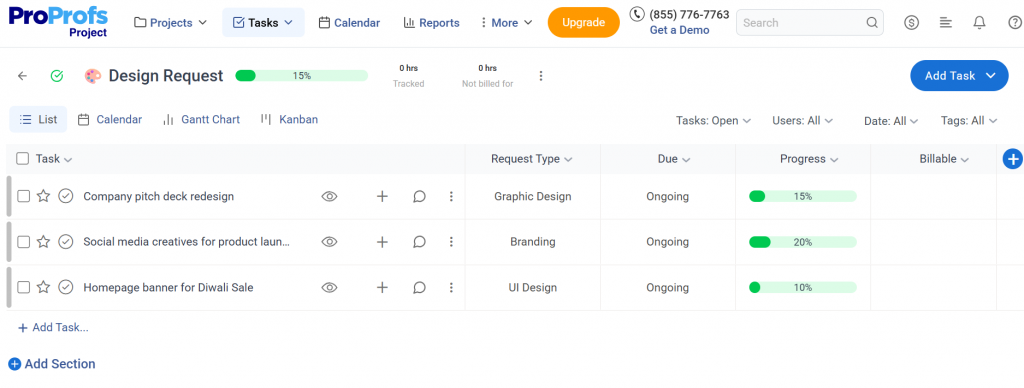
- Assign roles and responsibilities upfront so ownership is clear, and accountability doesn’t get diluted
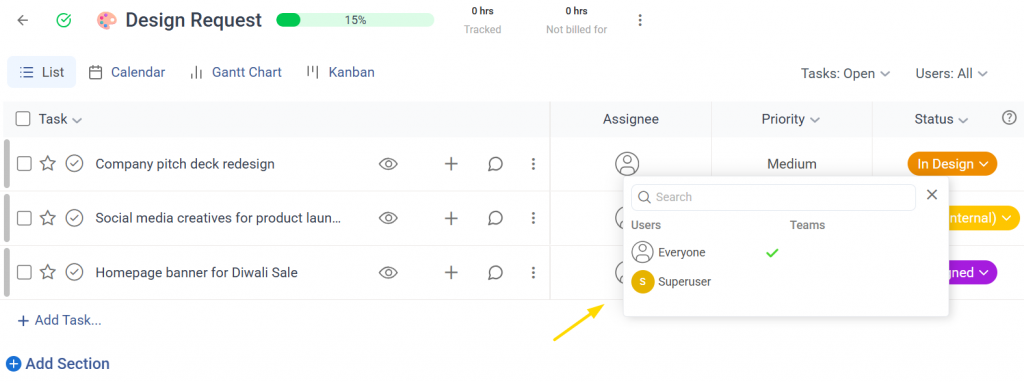
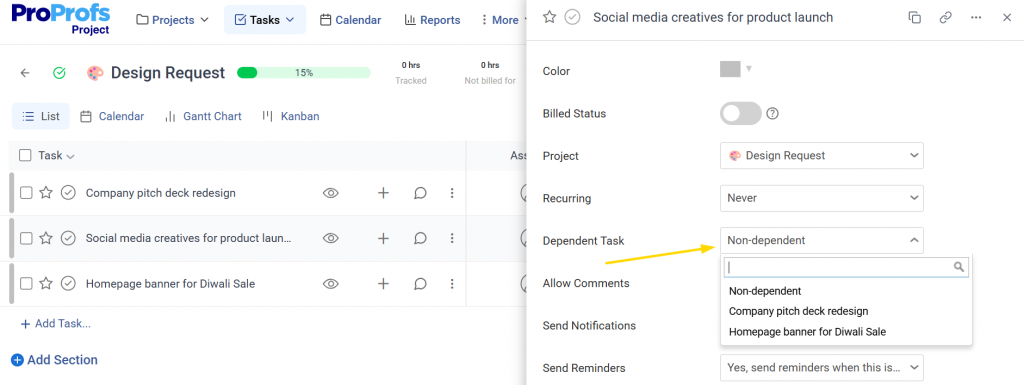
- Identify task dependencies early to avoid delays caused by work waiting on other work
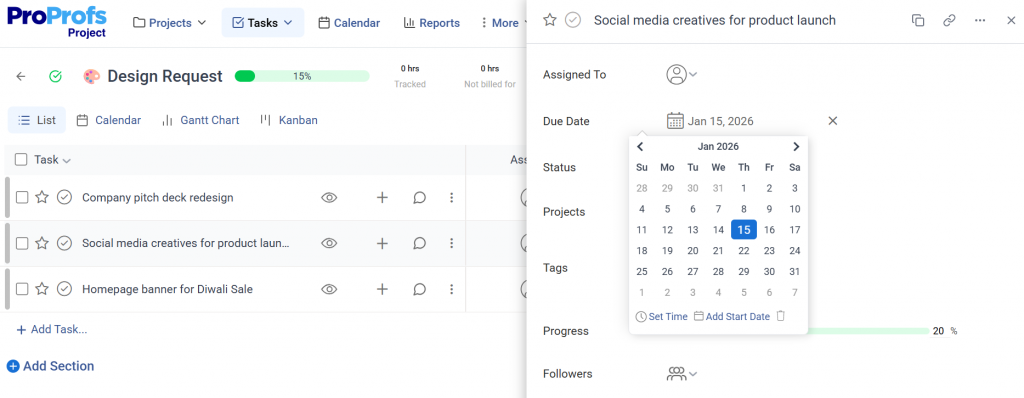
- Create a realistic timeline that aligns with business priorities and available capacity
- Define quality standards to ensure outputs meet expectations, not just deadlines
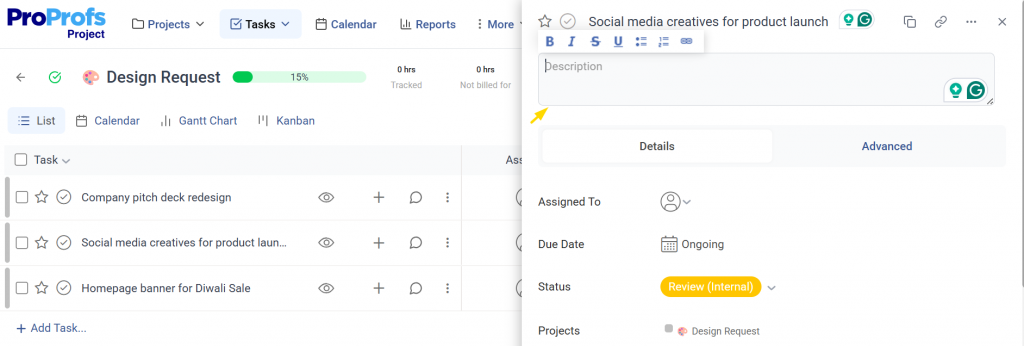
- Obtain stakeholder approval to lock the plan before execution begins
Essential documents to keep on hand:
- Project charter
- Task list or WBS
- Timeline
- RACI matrix
- Decision log
This level of project planning gives you visibility, control, and fewer surprises as the project moves forward.
3. Budget & Resource Planning
Before committing to execution, it’s worth pausing to sanity-check two things that decide whether a project stays on track or not: how much it will actually cost, and whether the right people and resources are realistically available.
Most overruns start at the project budgeting and resource planningstage, long before any real work begins.
- Break the work down and estimate costs at the task level so your budget reflects real effort, not rough guesses
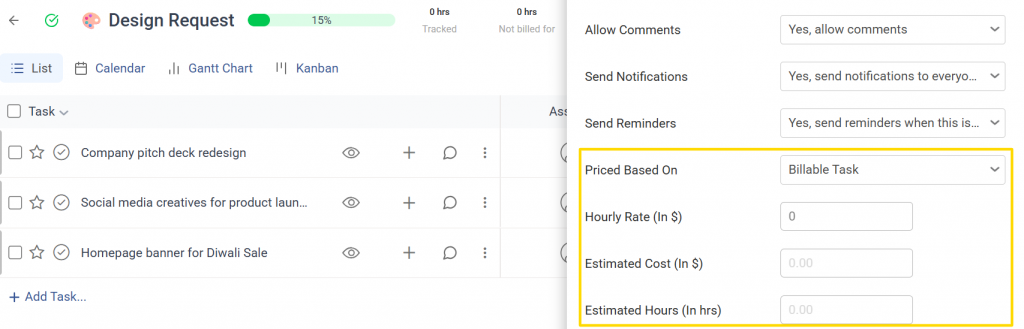
- Step back and look at the total budget to understand what the project truly demands from a cash and time perspective
- Compare the plan against available funds and adjust project scope, timelines, or resourcing early instead of mid-project
- List out every resource the project depends on, from internal teams to tools, vendors, or materials
- Check actual availability, not assumed availability, to avoid overloading people or creating bottlenecks
- Decide early where hiring, outsourcing, or purchases are needed so execution doesn’t stall
- Lock the budget and resource plan with leadership approval to avoid confusion or second-guessing later
At this stage, having everything tracked in one place, including costs, ownership, and approvals, makes it much easier to stay in control as the project moves forward.
4. Risk & Change Management
No project runs exactly as planned. What usually causes trouble isn’t the risk itself, but the fact that it wasn’t seen early or talked about openly. For business leaders, risk management is less about paperwork and more about staying ahead of issues before they turn expensive.
Here’s how you can surface problems early and respond with intention, not panic.
- Identify potential risks upfront, whether they relate to timelines, budgets, people, dependencies, or external constraints
- Capture risks in a simple risk register so nothing lives only in someone’s head
- Assess the impact and likelihood of each risk to separate minor issues from real threats
- Define clear mitigation plans so the team knows what to do if a risk materializes
- Review risks at key milestones, not just at the start, as priorities and conditions change
- Document and formally approve scope changes to prevent silent drift and misaligned expectations
Handled well, risk and change management give you control and predictability, even when conditions shift mid-project.
5. Execution & Monitoring
As a business head, you don’t want to chase updates or guess where things stand. You want to know what’s moving, what’s stuck, and where attention is needed, without micromanaging the team.
This checklist for project management helps you stay informed and in control as the work progresses.
- Ensure every task has a clear owner and deadline so responsibility doesn’t get shared into oblivion
- Track dependencies between tasks to avoid delays caused by work waiting on other work
- Share regular, predictable status updates using project collaboration software, so progress is visible without constant follow-ups
- Review team blockers frequently to remove obstacles before they slow everything down
- Maintain consistent stakeholder communication to prevent surprises and last-minute escalations
- Document changes as they happen so decisions are clear, and the plan stays current
Having a single place where tasks, comments, updates, and reminders live makes collaboration easier and reduces back-and-forth as execution picks up.
6. Milestones, Progress Tracking & Quality Checks
When you’re running a business, progress shouldn’t be a feeling. You should be able to see it clearly. Milestones make that possible by turning long projects into visible checkpoints that tell you whether things are moving as planned or quietly drifting.
To stay ahead of delays and quality issues before they become expensive to fix:
- Define a small set of meaningful milestones that represent real progress, not just activity
- Attach clear success criteria to each milestone so completion is measurable, not subjective
- Assign realistic dates and ownership so milestones are achievable and accountable
- Track progress against milestones regularly, using simple indicators like percent complete or phase completion
- Use visual tools like Gantt charts, calendars, or dashboards to see timelines, dependencies, and slippage at a glance
- Review deviations early and adjust scope, timelines, or resources before delays compound
- Check quality continuously, not just at the end, to prevent defects from piling up
- Address gaps immediately so small issues don’t turn into rework later
If you’re new to Gantt charts or want a quick refresher, a short walkthrough can make things click faster.
Watch this quick Gantt chart video to see how milestones, timelines, and dependencies come together visually.
Keeping milestones, progress indicators, and project quality checks visible in one place makes it much easier to intervene early and keep execution aligned with expectations.
7. Project Handover & Closure Checklist
Finishing a project isn’t just about stopping work. It’s about making sure nothing important is left hanging once the team moves on. A clean close protects your investment, preserves trust with stakeholders, and sets you up to run the next project better.
For that, close the loop properly by:
- Confirming all deliverables are completed and match what was originally agreed upon
- Obtaining formal stakeholder acceptance so that expectations are clearly met
- Finalizing all project documentation to avoid gaps once the project is handed over
- Closing out budgets, payments, and contracts to prevent lingering financial issues
- Conducting a project evaluation survey to capture honest feedback from the team and stakeholders
- Documenting lessons learned and best practices while details are still fresh
- Sharing outcomes and learnings so future projects benefit from this experience
Handled well, project closure brings clarity, accountability, and long-term value, not just a sense of completion.
Common Mistakes to Avoid When Using Project Management Checklists
Checklists are meant to simplify work, not slow it down. But when they’re used the wrong way, they can quietly add friction instead of clarity.
Here are a few mistakes business leaders should watch out for:
1. Letting tools add unnecessary friction: If tracking progress feels like extra work, people stop doing it. Using a simple, centralized workspace like ProProfs Project helps teams update tasks, comments, and statuses without jumping between tools.
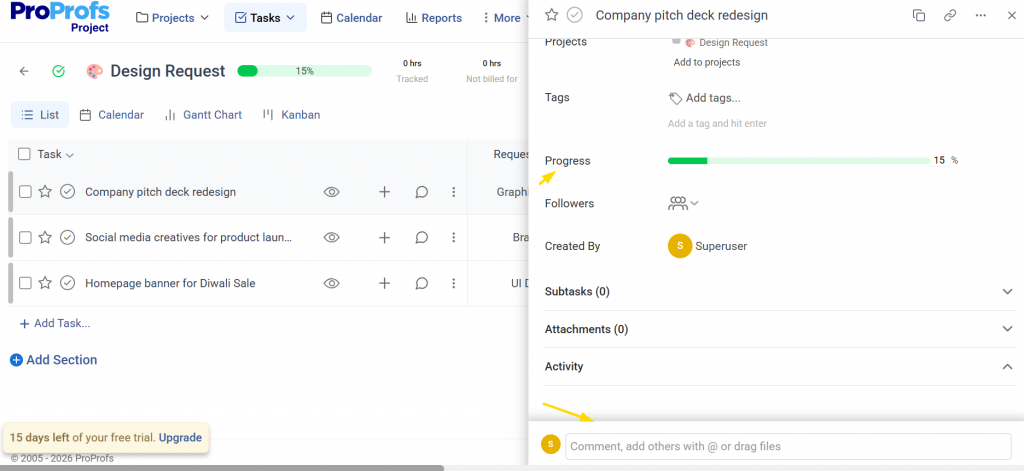
2. Making the checklist too long: When everything becomes a project planning checklist item, nothing gets priority. Keep it focused on actions that actually move the project forward.
3. Treating the checklist like a rigid rulebook: A checklist should support decisions, not replace judgment. As projects evolve, the checklist should too.
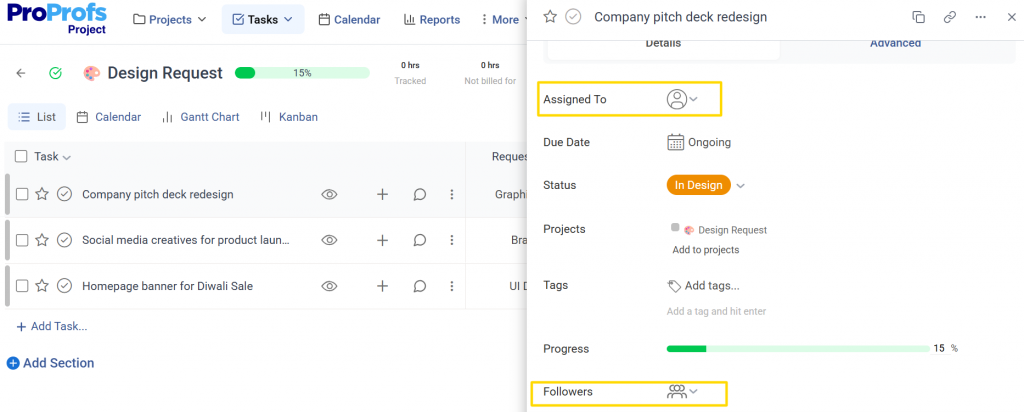
4. Not assigning clear owners: If no one owns a task, it usually gets delayed. Assigning ownership directly in a tool makes accountability visible without micromanaging.
5. Using the checklist without reflecting on outcomes: The biggest value comes when you update your checklist based on real project outcomes, not assumptions.
Used well, a checklist becomes a practical guardrail. Used poorly, it fades into the background and gets ignored.
Adapting This Checklist for Different Project Types
No two projects run exactly the same way. A marketing launch, a software rollout, and an internal process change all need different levels of detail. The key is not to over-customize upfront.
Start with the same core checklist. Then adjust based on the type of work.
1. Marketing projects: Emphasize timelines, dependencies, and approvals. Campaigns move fast, so clarity around deadlines and sign-offs matters more than heavy documentation.
2. Software or IT projects: Pay extra attention to dependencies, risk checkpoints, and quality reviews. Small technical delays can quickly impact delivery dates.
3. Operations or HR initiatives: Focus on stakeholder alignment and change management. These projects often affect people’s day-to-day work, so communication becomes critical.
4. Client-facing vs internal projects: Client projects need tighter scope control and frequent updates. Internal projects can be more flexible, but still need clear ownership and milestones.
The idea is simple: use the project planning checklist as a foundation, not a fixed template. Start small, learn from each project, and adapt it as your business evolves.
Measuring the Impact of Your Project Management Checklist
A project checklist is only useful if it’s actually improving how work gets done. You don’t need complex metrics to know whether it’s working. A few simple signals are usually enough.
Look for these changes over time:
- Higher task completion rates without constant follow-ups or reminders
- Fewer missed steps during execution, especially around approvals and handovers
- Less time spent chasing updates, because progress is visible when needed
- Smoother and faster handovers at the end of projects
- Fewer last-minute surprises that force rushed decisions or rework
If your projects feel calmer, more predictable, and easier to oversee, the project checklist is doing its job. If not, treat it like a living document and adjust it based on what you’re seeing in real projects.
Create a Project Checklist That Keeps Projects Moving Without Overhead
Projects rarely fail because of bad ideas. They struggle when priorities are unclear, ownership is missing, or important steps fall through the cracks. A well-built project management checklist helps you bring order to that complexity without adding unnecessary processes.
Used right, a project checklist for project managers gives clarity on what needs to happen, confidence that nothing critical is missed, and control over cost, timelines, and execution. It also creates consistency across projects, even as teams, goals, and conditions change.
The key is to keep it practical. Start simple. Assign clear owners. Review it regularly and refine it based on what actually works in your business.
As your projects grow in size and overlap, having everything tracked in one place can make this easier to manage. Tools like ProProfs Project can help centralize plans, tasks, updates, and approvals without adding friction.
Frequently Asked Questions

Can beginners use project management checklists?
Yes. Checklists are especially useful for beginners because they provide structure, clarity, and confidence without needing advanced frameworks.
Do checklists work for agile projects?
Yes. In agile projects, checklists help with consistency around planning, reviews, handoffs, and risk checks without limiting flexibility.
How often should a checklist be updated?
Update it after every project or major issue. Real-world experience is the best input for improving your checklist over time.
FREE. All Features. FOREVER!
Try our Forever FREE account with all premium features!