I’ve been working with marketing teams long enough to know that the chaos isn’t a talent problem; it’s a systems problem.
Marketing campaigns fall apart not because the ideas are bad, but because three people thought someone else was handling approvals, the content calendar lives in a spreadsheet no one updated, and the creative brief is buried in a Slack thread from two weeks ago. Sound familiar? If you’re a marketing manager, content lead, or agency owner, you’ve lived this. The best marketing project management software exists precisely to fix this, not just to add another tool to your stack, but to become the single operating system for your entire marketing operation.
I’ve personally tested and reviewed 15 of the top platforms available today. In this guide, I’ll walk you through what each tool does well, where it falls short, and which ones are worth your time based on your team size, workflow complexity, and budget.
What Is Marketing Project Management Software?
Marketing project management software is a specialized platform that helps marketing teams plan, execute, track, and analyze campaigns from a single centralized hub. Unlike generic project management tools, marketing-focused solutions include features like content calendars, creative approval workflows, campaign tracking dashboards, and integrations with marketing tools like HubSpot, Google Analytics, and social media schedulers.
In short, it replaces the chaos of scattered Slack messages, disconnected spreadsheets, and endless email threads with one clear, shared system where everyone knows what’s happening, who owns what, and when it’s due.
Why Do Marketing Teams Need Specialized Project Management Software?
Before we dive into the tools, it’s worth asking: can’t marketing teams just use a generic project management tool?
The honest answer is: technically yes, but practically no.
Marketing teams operate differently from engineering or operations teams. They manage creative sprints, multi-channel campaign deadlines, external agency reviewers, brand approval workflows, and constantly shifting priorities, often all at once. Generic tools rarely account for content production workflows, guest reviewer access, or campaign-level reporting.
Here’s what the best marketing project management software actually solves:
- Campaign execution delays caused by unclear ownership and scattered communication
- Content approval bottlenecks where drafts sit in email chains for days
- Lack of visibility for marketing directors and CMOs who need real-time campaign status
- Resource overload where the same three people are on every project
- No single source of truth for timelines, assets, and briefs
According to a study by McKinsey in 2023, generative AI could increase marketing productivity by 5–15% of total marketing spend, worth roughly $463 billion annually, making the case for smarter, more automated campaign management tools stronger than ever.
The right tool, one with solid workflow automation built in makes that possible. If you’re also trying to map out how your marketing workflow should be structured before choosing a tool, that’s worth doing first.
Top 15 Best Marketing Project Management Software at a Glance
Before we get into the full reviews, here’s a quick snapshot of all 15 tools, what they’re best at and what they’ll cost you.
| Tool | Best For | Pricing | User Rating (G2) |
| ProProfs Project | Simplest Project Management Tool for SMBs With Client Invoicing, Time & Billing | Forever free for small teams. Paid plan starts at $39.97/month | 4.4/5 |
| Productive | Agency finances and project profitability | Starts at $10/user/month | 4.6/5 |
| monday.com | Managing project resources | Starts at $27/month/3 seats | 4.7/5 |
| Celoxis | Managing complex marketing campaigns | Starts at $10/user/month | 4.4/5 |
| Workstatus | Consulting teams | Free plan available; paid from $3/user/month | 4.7/5 |
| ClickUp | Generating detailed reports | Free plan available; paid from $7/user/month | 4.7/5 |
| Asana | Strategic project planning | Free plan available; paid from $10.99/user/month | 4.4/5 |
| Wrike | Automating administrative workflows | Starts at $9.80/user/month | 4.2/5 |
| Smartsheet | Real-time project collaboration | Free plan available; paid from $9/member/month | 4.4/5 |
| ProofHub | Built-in proofing and approvals | Starts at $79/month/10 users | 4.5/5 |
| Basecamp | Remote team collaboration | Starts at $15/user/month | 4.1/5 |
| Zoho Projects | Task automation | Free plan available; paid from $4/user/month | 4.3/5 |
| Jira | Issue tracking for developer-marketing teams | Free plan available; paid from $8.15/user/month | 4.3/5 |
| Confluence | Virtual team collaboration | Free plan available; paid from $5.75/user/month | 4.1/5 |
| Airtable | Campaign and product management | Free plan available; paid from $20/seat/month | 4.6/5 |
1. ProProfs Project – Simplest Project Management Tool for SMBs With Client Invoicing, Time & Billing
ProProfs Project is a user-friendly platform purpose-built to simplify how marketing teams plan, execute, and deliver projects on time and within budget.
When I used ProProfs Project to manage a product launch campaign, the first thing that struck me was how quickly I could get a project off the ground. I picked a marketing project management template, made a few tweaks for our campaign structure, and had tasks assigned to the team within minutes, no lengthy onboarding or complex setup required.
What made it genuinely useful for our marketing team was the combination of Gantt charts for timeline visibility, Kanban boards for sprint-style task management, and a calendar view that kept everyone aligned on deadlines. I could switch between these views instantly depending on what I needed to communicate, detailed timelines to leadership, task boards to the content team.
The automated workflows meant that repetitive steps like sending review reminders or updating task statuses happened on their own, freeing the team to focus on actual creative work. For marketing teams that are tired of juggling five different tools, ProProfs Project brings everything like tasks, time tracking, invoices, reports, and file sharing under one roof.
More recently, the tool has brought AI directly into campaign setup too. Describe a campaign in plain language, and its AI Project Designer builds out the tasks, stages, and assignments for you automatically, cutting into the setup time that used to eat into actual campaign strategy. There’s also an AI assistant available throughout the project, so you can ask direct questions like “which campaigns are overrunning” instead of digging through dashboards yourself.
Pros:
- Provides a 360-degree project view with seamless switching between Gantt, Kanban, and Calendar
- AI Project Designer and AI assistant that build campaign structures and flag risks automatically
- Automated workflows eliminate repetitive manual tasks and reduce administrative overhead
- Built-in time tracking and invoice generation tied directly to billable and non-billable hours
- Smart analytics and performance reports that are shareable and presentation-ready
- Centralized file sharing and task comments enable real-time team collaboration
Cons:
- No dark mode option available on the platform
- No dedicated account manager support on the free plan
User Rating: 4.4/5 (G2)
Pricing:
Free plan available. Paid plans start at $39.97/month.
2. Productive – Best for Managing Agency Finances and Project Profitability
Productive.io is an agency management platform built for professional services teams that need more than task tracking, they need to know whether the work they’re delivering is actually making money.
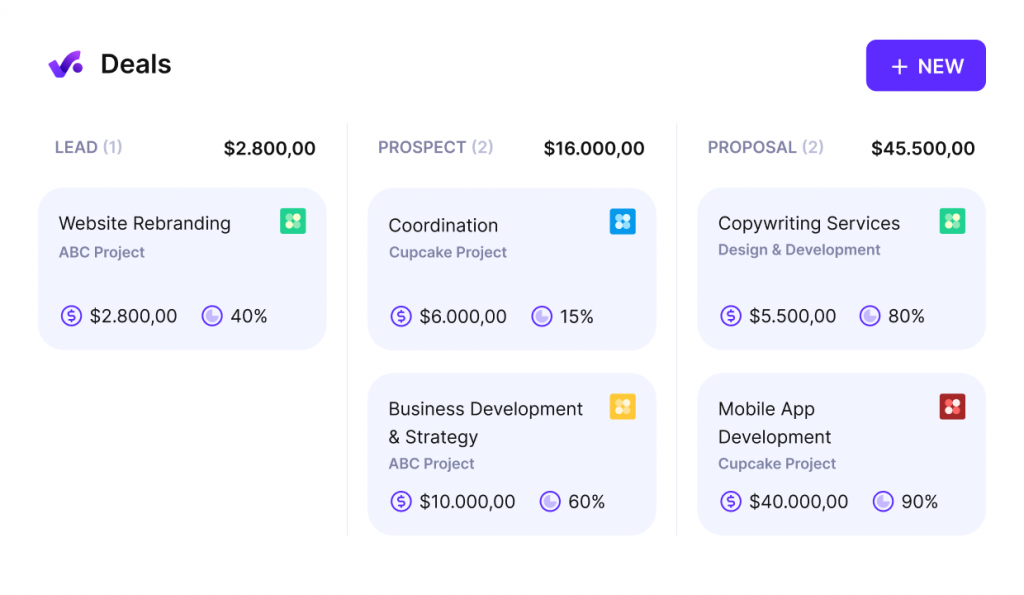
A colleague of mine who runs a mid-size digital marketing agency switched to Productive about a year ago and hasn’t looked back. What sold her was how tightly the financial layer integrates with the project layer. She told me that before Productive, she was constantly switching between spreadsheets and her PM tool just to understand project margins. With Productive, that visibility lives right alongside tasks, timelines, and resource bookings.
The platform tracks billable vs. non-billable hours, forecasts team capacity, and connects time tracking directly to client invoices, all in one place. For agencies managing multiple clients simultaneously, that complete operational picture is genuinely hard to replicate elsewhere.
Pros:
- Real-time budget tracking and profitability reporting at the individual project level
- Resource planning views based on actual team capacity and utilization
- Time tracking tied directly to project financials and automated client invoicing
- Customizable dashboards for live visibility into agency-wide performance
Cons:
- Purpose-built for agencies; teams outside professional services may find certain features excessive
- No built-in content scheduling or social media publishing capabilities
User Rating: 4.6/5 (G2)
Pricing:
Free 14-day trial available. Paid plans start at $10/user/month (billed annually).
3. monday.com – Best for Managing Marketing Project Resources
monday.com is one of the most versatile best project management software for marketing teams, helping you manage campaigns, allocate resources, and keep everyone aligned, regardless of team size.
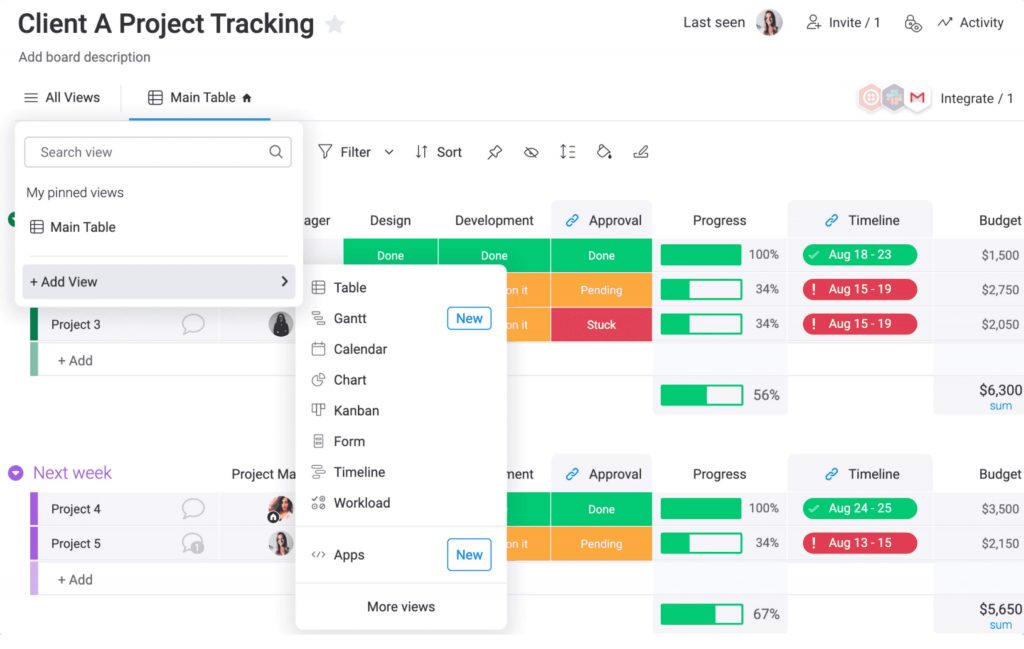
When I first set up monday.com for a multi-channel campaign, what stood out immediately was how flexible the board system was. I could create a campaign board that tracked content pieces, assign owners, attached deadlines, and set automations to notify the right people when a task moved to the next stage. The platform’s multiple views like Kanban for content pipelines, Timeline for campaign schedules, and Calendar for publishing made it adaptable to how different team members prefer to work.
The resource management features were particularly useful for avoiding the classic marketing team problem of the same two people being on every project. The workload view made capacity issues visible before they became a crisis.
Pros:
- Flexible boards and workflows that can be adapted to virtually any campaign structure
- Campaign overview views including Kanban, Timeline, and Calendar
- Powerful automation to reduce manual task handoffs and status updates
- Robust mobile app for managing campaigns on the go
Cons:
- Pricing can be relatively expensive for small businesses or startups
- Reporting capabilities, while solid, could be more granular for complex campaign analytics
User Rating: 4.7/5 (G2)
Pricing:
Free plan available (limited to 2 seats). Paid options start at $27/month/3 seats.
4. Celoxis – Best for Managing Complex Multi-Channel Marketing Campaigns
Celoxis is a powerful best project management software for marketing departments that need to manage multiple campaigns simultaneously with tight deadlines, shared resources, and clear budget oversight.
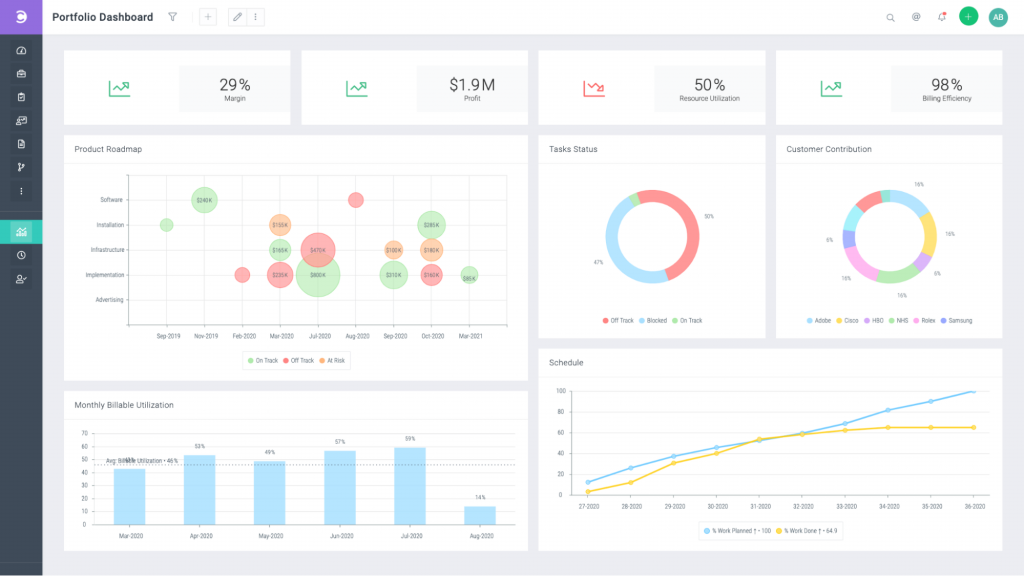
When I explored Celoxis, what stood out was how clearly it connected campaign planning with execution. Instead of managing tasks in isolation, I could see how work was distributed across team members, how campaign timelines overlapped, and whether workloads were realistic before a campaign even started. That kind of upfront visibility is something most marketing managers only wish they had.
The platform handles campaign dependencies, approval workflows, and ongoing scope changes without losing visibility of the bigger picture. Built-in dashboards give marketing managers a real-time view of campaign health, helping them spot delays or resource gaps before they impact delivery dates.
Pros:
- Clear visibility into campaign timelines, task dependencies, and delivery progress
- Resource and workload management to prevent team overload across concurrent campaigns
- Real-time dashboards for tracking campaign performance and budget spend
- Workflow automation for approvals, task updates, and stakeholder notifications
Cons:
- Not ideal for very small teams looking for a lightweight task list tool
- Interface may feel complex compared to simpler marketing-focused platforms
User Rating: 4.4/5 (G2)
Pricing:
Starts at $10/user/month (free trial available).
5. Workstatus – Best Marketing Project Management Software for Team Visibility & Campaign Execution
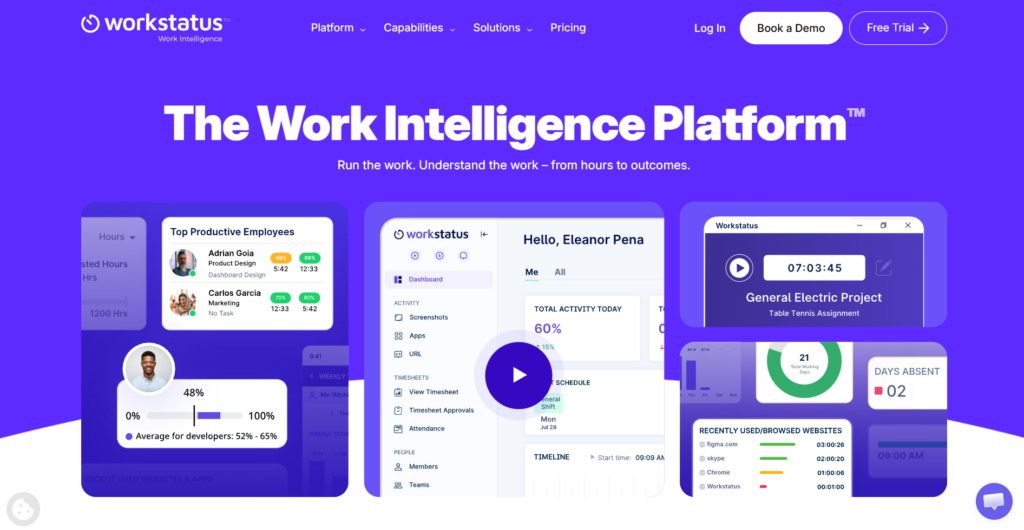
Workstatus is a project management platform that helps marketing teams plan campaigns, organize tasks, track progress, and collaborate more effectively from a centralized workspace.
What I like about Workstatus is its focus on keeping projects structured without adding unnecessary complexity. Marketing teams can create projects, assign tasks, set priorities, track deadlines, and monitor campaign progress through a single dashboard. Whether you’re managing content calendars, product launches, social media campaigns, or client deliverables, Workstatus helps ensure that every task stays on track.
The platform also makes it easy to coordinate work across teams by providing clear visibility into responsibilities, project timelines, and task statuses. This reduces communication gaps and helps teams deliver campaigns faster and more efficiently.
Pros:
- Project planning tools for organizing marketing campaigns and workflows
- Task assignment, prioritization, and deadline management
- Real-time project tracking for monitoring campaign progress
- Centralized collaboration for marketing teams and stakeholders
- Customizable workflows that adapt to different campaign types
Cons:
- Advanced project customization options may require initial setup
- Some integrations available in larger project management tools may not be included
User Rating: 4.7/5 (G2)
Pricing:
Free trial available for 7-days. Paid plans start at ₹300 user per/month, with higher-tier plans available for growing teams.
6. ClickUp – Best Free Marketing Project Management Software for Detailed Reporting
ClickUp is one of the most feature-rich options on this list and a strong choice for marketing teams that need a centralized hub for tasks, sprints, content, and reporting, all without spending a fortune.
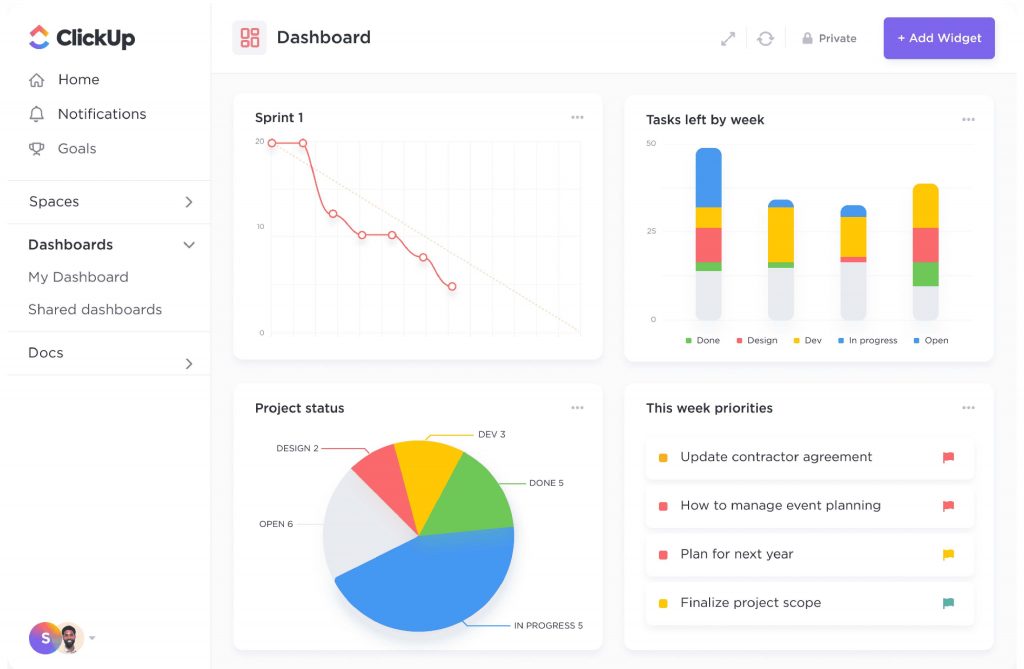
I tested ClickUp’s free plan extensively when my team was managing a quarterly content campaign. What I liked most was the sheer flexibility of the tool, the ability to set weekly, monthly, and quarterly goals, track progress across campaigns using Kanban boards, and schedule daily tasks with reminders all in one place. Custom widgets let us build campaign ROI dashboards directly inside the tool, which meant no more jumping between platforms to pull reporting data.
For marketing teams that also work with external partners, ClickUp Forms are genuinely useful for streamlining creative requests and briefs from clients or other departments.
Pros:
- Centralized hub for tasks, sprints, goals, and campaign resources
- Multiple project views including Kanban, list, calendar, and Gantt
- ClickUp Forms streamline creative requests and intake from internal and external stakeholders
- Custom widgets and dashboards for measuring campaign ROI and KPIs
Cons:
- Agile reporting is not available on the free plan
- The interface can feel overwhelming for new users due to the sheer number of features
User Rating: 4.7/5 (G2)
Pricing:
Free plan available (no team sharing or native time tracking). Paid options start at $7/user/month.
7. Asana – Best for Strategic Marketing Project Planning
Asana is one of the most well-known best marketing agency project management software options, trusted by marketing teams globally for its clean interface and powerful workflow management capabilities.
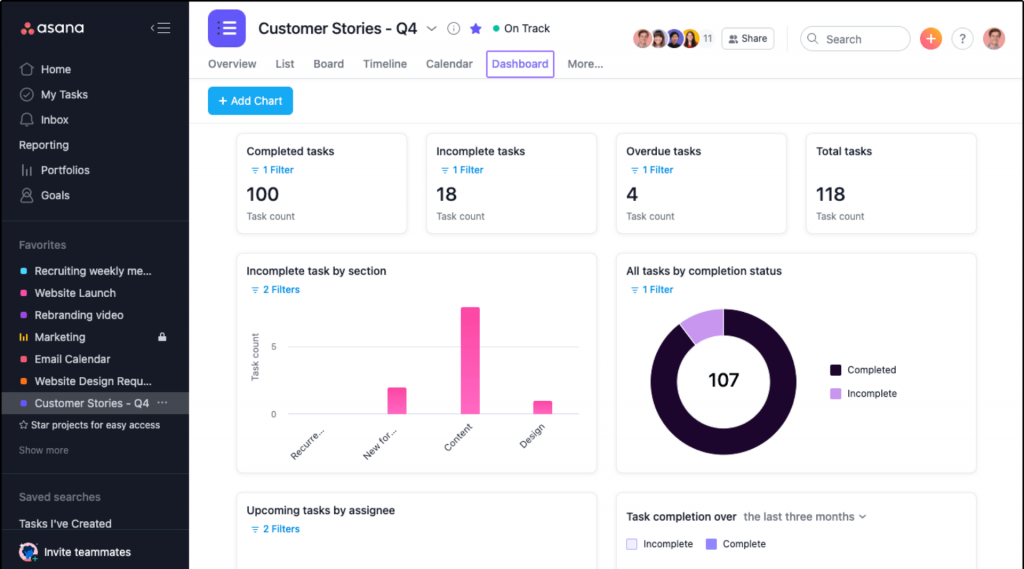
When a friend who manages a B2B marketing team at a SaaS company showed me how she uses Asana, I immediately understood the appeal. She had campaign workflows mapped out so clearly that any new team member could pick up a task and understand exactly where it fits in the bigger picture. She loved how easily she could convert stakeholder feedback into actionable tasks, reprioritize work when campaign goals shifted, and customize workflows for different campaign types.
The feature that genuinely impressed me watching her use it was Asana’s approval tracking — every piece of content had a clear visual trail of what had been approved, what was pending, and who needed to sign off next.
Pros:
- Clear workflow automation to eliminate manual task routing and repetitive assignments
- Approval tracking to keep every stakeholder informed on sign-off status at all times
- Multiple project views including Gantt and Calendar for flexible campaign tracking
- Extensive template library for recurring marketing workflows and campaign structures
Cons:
- Time tracking capabilities are limited compared to dedicated tracking tools
- Not ideal for managing numerous complex projects with many interdependencies simultaneously
User Rating: 4.4/5 (G2)
Pricing:
Free plan available (no milestones or templates). Paid options start at $10.99/user/month.
8. Wrike – Best for Automating Marketing Administrative Workflows
Wrike is a top choice for marketing teams that want to reduce the administrative burden of campaign management through automation, real-time tracking, and flexible workflow customization.
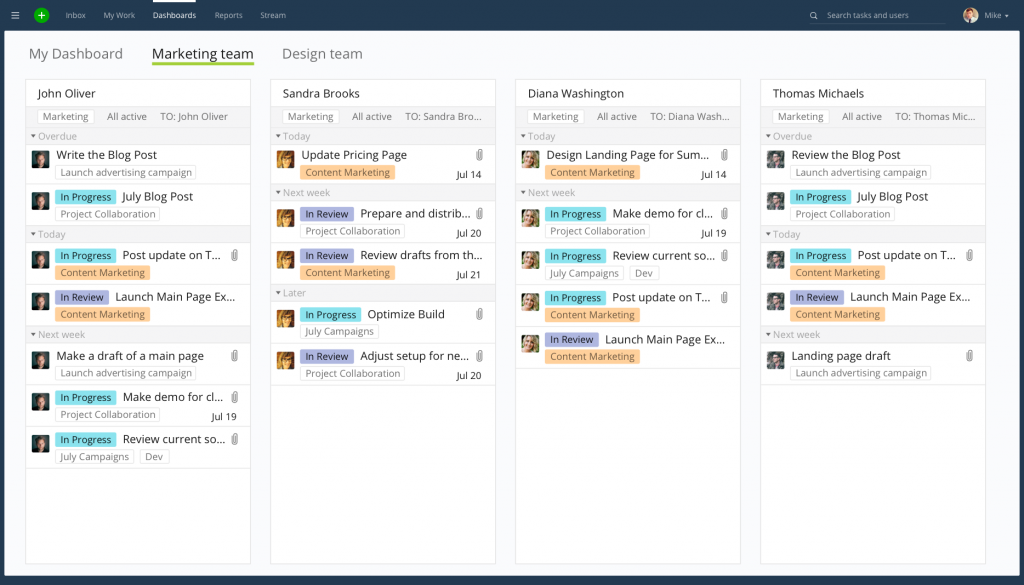
In a past role managing a digital marketing team, I relied heavily on Wrike’s ability to switch contexts quickly. Gantt charts for campaign-level planning, Kanban boards for sprint work, and a shared team calendar for keeping everyone coordinated, all within the same platform. What I found particularly valuable was the ability to comment directly on images, videos, and HTML previews inside tasks, which cut review cycles significantly and kept creative feedback organized in one place rather than scattered across email chains.
The budget management features were also genuinely useful. Being able to forecast expenses and track actual vs. planned spend at the campaign level was a capability I hadn’t expected from a project management tool.
Pros:
- Real-time performance reports that provide instant insights into digital marketing campaigns
- Budget management capabilities for forecasting and tracking campaign spend
- Direct proofing on images, videos, and HTML to reduce review and revision cycles
- Automatic timers and employee timesheets to monitor how team hours are allocated
Cons:
- No offline project management capabilities, which can be limiting in low-connectivity situations
- Some users report challenges with customer support response times
User Rating: 4.2/5 (G2)
Pricing:
Starts at $9.80/user/month.
9. Smartsheet – Best for Real-Time Marketing Campaign Collaboration
Smartsheet is a smart choice for marketing teams that are comfortable with spreadsheet-style layouts but need significantly more structure, real-time collaboration, and visibility across complex campaigns.
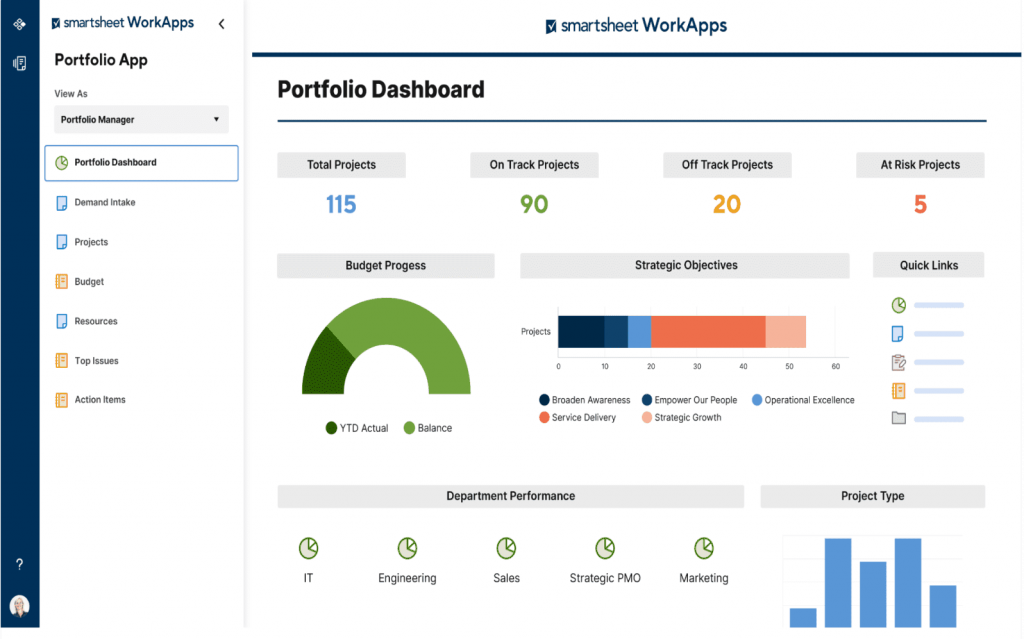
When a colleague who had spent years managing marketing campaigns in Excel made the switch to Smartsheet, she described it as “Excel, but with a brain.” The familiar grid interface made adoption easy for her team, but the addition of automated reminders, task dependencies, and real-time collaboration features meant she could finally stop chasing people for updates via email.
One thing she particularly valued was the project baseline feature, being able to compare what was planned versus what actually happened at the campaign level gave her team a framework for continuous improvement. Client portals also made it easy to keep external stakeholders informed without granting them access to internal project details.
Pros:
- Spreadsheet-style interface familiar to marketers coming from Excel-based workflows
- Project baselines to compare planned vs. actual campaign statistics over time
- Automated alerts and reminders to keep teams on deadline without manual follow-up
- Time tracking for understanding how team hours are being allocated across campaigns
Cons:
- Navigation can feel complex for users unfamiliar with grid-based project management tools
- Free plan is limited to a single user, which makes team collaboration impossible without upgrading
User Rating: 4.4/5 (G2)
Pricing:
Free plan available (limited to 1 user). Paid options start at $9/member/month.
10. ProofHub – Best for Marketing Teams That Need Built-in Proofing Tools
ProofHub is the go-to choice for marketing project managers who spend a significant portion of their day managing creative reviews, feedback cycles, and approval workflows. If you’re dealing with creative project management challenges, specifically where briefs, revisions, and approvals keep stalling campaigns, ProofHub is worth a close look.
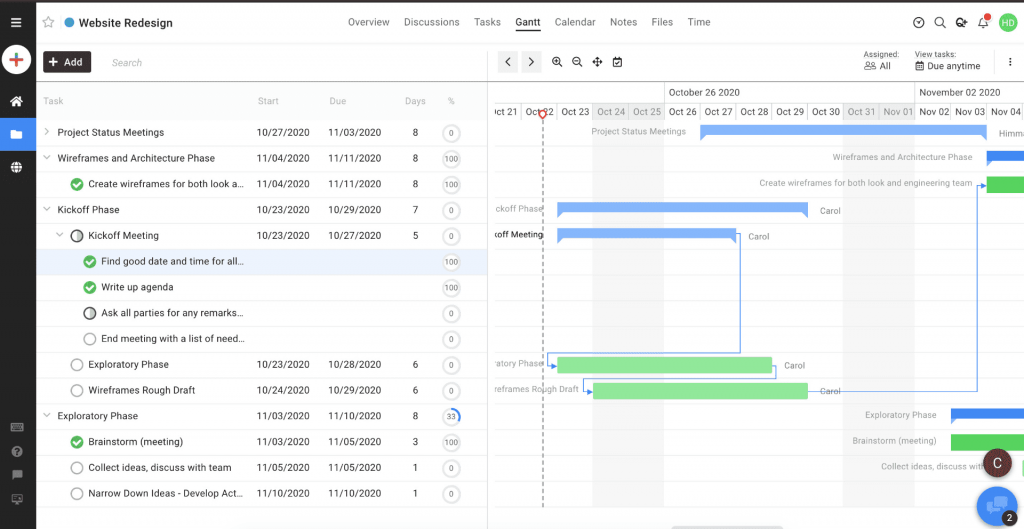
My experience with ProofHub was genuinely positive, especially for a phase of our work that involved a lot of creative asset reviews. The built-in proofing feature allowed my team to annotate directly on design files, images, and PDFs without ever leaving the platform. No more downloading files, marking them up in a separate tool, and re-uploading; all feedback lives in one place, attached directly to the task.
ProofHub’s customizable templates let me set up recurring campaign structures quickly, and the shared calendar kept the whole team aware of key milestones without needing a separate calendar tool.
Pros:
- Built-in proofing tool supports annotations directly on PDF, JPEG, and other file formats
- Customizable project templates to standardize and accelerate recurring campaign workflows
- Shared calendar for scheduling events, campaign milestones, and content deadlines
- Time tracking on tasks and projects for accurate billing and performance measurement
Cons:
- The mobile app is noticeably less capable than the full web version
- Customer support can be slow to respond to complex queries
User Rating: 4.5/5 (G2)
Pricing:
Starts at $79/month/10 users.
11. Basecamp – Best for Remote Marketing Team Collaboration
Basecamp is an excellent fit for distributed marketing teams that need a simple, reliable way to manage campaigns and stay connected regardless of where team members are located.
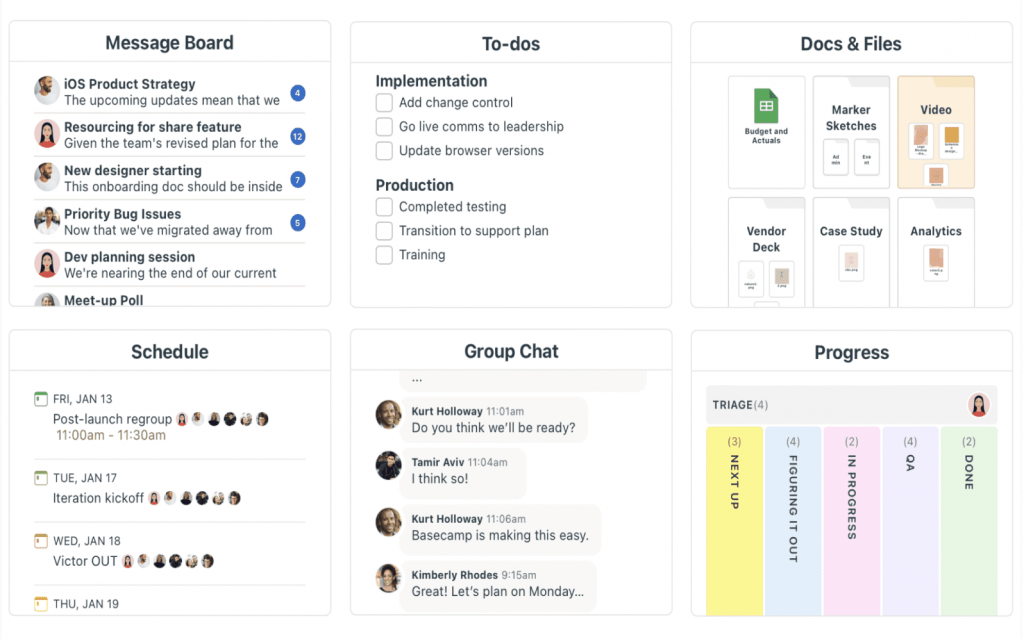
When I was working with a remote marketing team spread across three time zones, Basecamp’s structure was one of the most effective I came across. Every project had its own space with to-do lists, a message board, a shared file area, and a team chat, all organized under one roof. The automatic check-ins feature was particularly useful: instead of scheduling status meetings, the tool would automatically ask team members what they’d worked on, and responses were collected into a single, searchable log.
For marketing teams that feel buried in meeting overhead, Basecamp’s approach to async communication is genuinely refreshing.
Pros:
- Automatic check-in features replace status meetings with structured async communication
- Real-time Campfire chat and direct Pings for quick team communication
- Clear project schedules and to-do lists that can be tracked from anywhere
- Shared file storage ensures the latest assets are always accessible to the whole team
Cons:
- No native time tracking, which is a significant gap for billing-sensitive marketing teams
- Lacks granular reporting features compared to more data-focused PM tools
User Rating: 4.1/5 (G2)
Pricing:
Starts at $15/user/month.
12. Zoho Projects – Best for Marketing Task Automation
Zoho Projects is a strong option for marketing teams already embedded in the Zoho ecosystem and looking for cost-effective project management with solid automation capabilities.
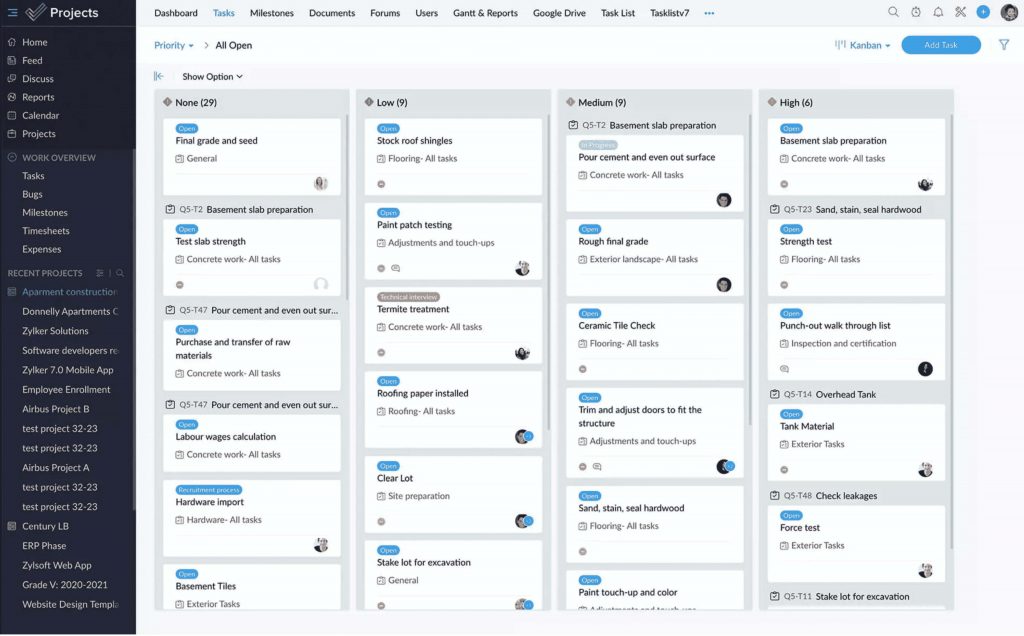
Creating and assigning tasks in Zoho Projects was something I found impressively straightforward during my time using the platform. The milestone system was especially well thought out, I could designate key campaign deliverables as milestones with just a checkbox, giving the team a clear sense of progress against major campaign goals. The inter-project dependency management made cross-team collaboration smoother than I expected, particularly when our content and paid media teams were running parallel workstreams.
The planned vs. actual chart was a useful addition for post-campaign analysis, letting the team see clearly where timelines had slipped and by how much.
Pros:
- Planned vs. actual chart for tracking whether campaigns are meeting predefined timelines and budgets
- Strong task automation to reduce manual follow-up and administrative work
- Seamless integration with Zoho Docs for in-tool document collaboration with comments
- Cross-project dependency management for teams running multiple parallel campaigns
Cons:
- Search functionality needs meaningful improvement for large-scale project libraries
- Does not offer ready-to-use templates, requiring more initial setup time
User Rating: 4.3/5 (G2)
Pricing:
Free plan available (limited to 2 projects). Paid options start at $4/user/month.
13. Jira – Best for Developer-Marketing Teams That Need Issue Tracking
Jira is primarily a developer tool, but it works surprisingly well for marketing teams that operate in agile sprints, particularly those that sit at the intersection of product and marketing.
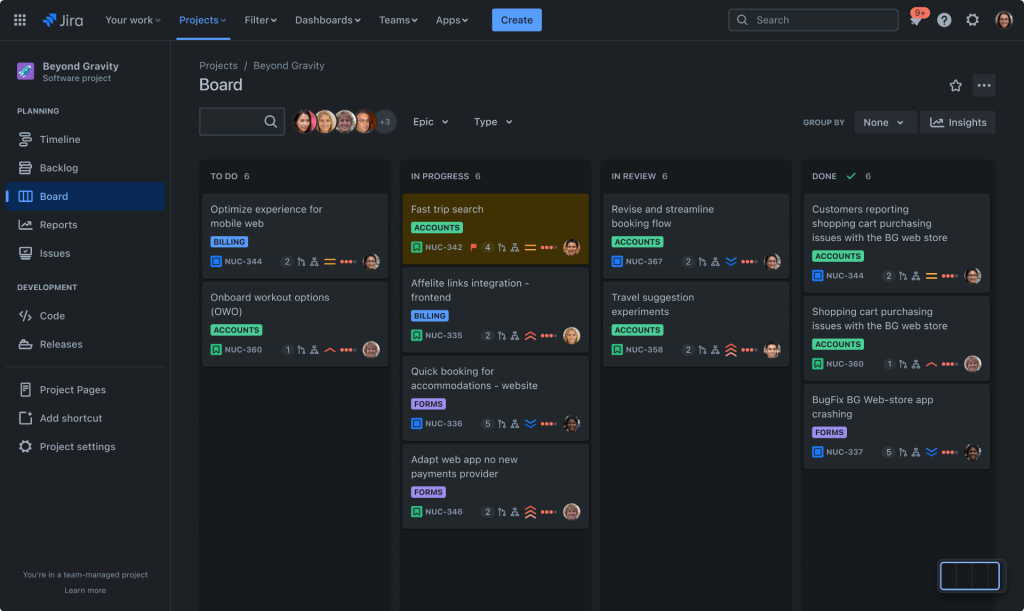
When managing a product launch campaign where my team needed to coordinate closely with the engineering team, Jira was already the tool the engineers used, so it made sense for marketing to work within the same system rather than create a parallel workflow. The Sprints dashboard gave the marketing team a structured way to plan campaign iterations. Epics helped us organize large campaigns into manageable tracks, and the backlog kept lower-priority tasks visible without cluttering the active sprint.
The Atlassian Marketplace integrations, particularly with Confluence and Trello made cross-team collaboration much smoother.
Pros:
- Supports agile methodologies (Scrum and Kanban) for structured campaign sprint planning
- Backlog feature to track and prioritize marketing tasks, ideas, and future campaigns
- Seamless integration with Trello, Confluence, and thousands of third-party apps
- Rich dashboards for tracking and analyzing campaign progress and performance metrics
Cons:
- Weak team chat functionality makes it difficult to communicate contextually within the tool
- Setup and configuration can be time-consuming, especially for non-technical marketing teams
User Rating: 4.3/5 (G2)
Pricing:
Free plan available (limited to 10 users). Paid options start at $8.15/user/month.
14. Confluence – Best for Virtual Team Collaboration and Documentation
Confluence is not a traditional project management tool, but for marketing teams that generate a lot of documentation, brand guidelines, campaign briefs, editorial calendars, and SOPs, it’s genuinely invaluable.
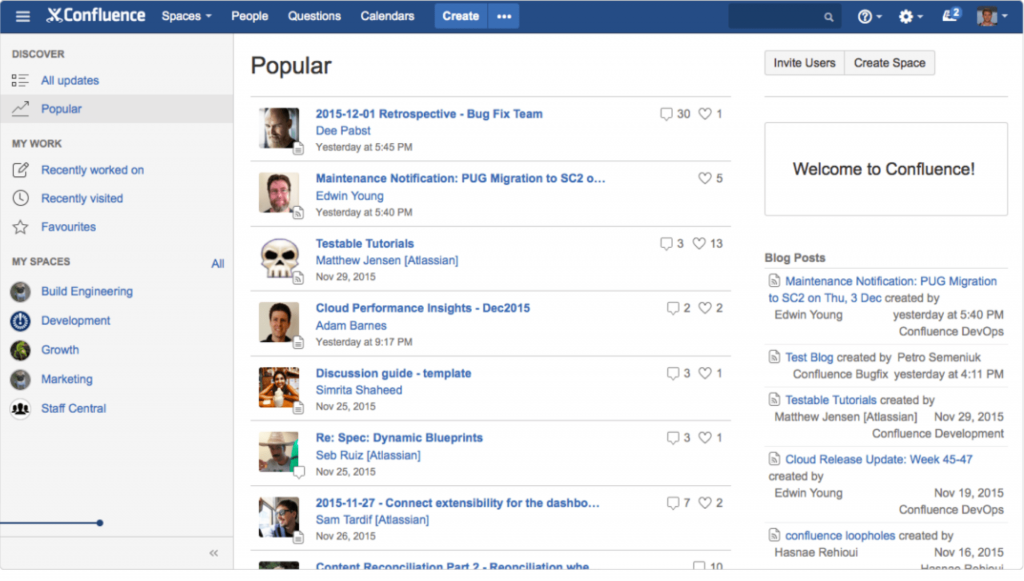
I found Confluence to be a fantastic tool for keeping our marketing team’s knowledge organized. When we were running a large content marketing program, Confluence became the home for every blog brief, campaign strategy document, SEO research summary, and brand guideline. Multiple team members could work on the same document simultaneously, leave inline comments, and track revision history, all without the chaos of shared Google Docs scattered across different folders and drives.
For virtual marketing teams, the mobile apps and powerful search functionality make it easy to find the information you need without digging through Slack archives or email threads.
Pros:
- Real-time collaborative document editing with comments, @mentions, and revision tracking
- Mobile apps for iOS and Android to keep virtual teams connected and informed on the go
- Customizable workspaces for different teams, campaigns, or projects within the same organization
- Powerful search functionality for quickly locating briefs, strategies, and documentation
Cons:
- Occasional sluggishness and technical glitches, particularly in large workspaces
- Works best as a complement to a dedicated PM tool rather than a standalone solution
User Rating: 4.1/5 (G2)
Pricing:
Free plan available (limited to 10 users). Paid options start at $5.75/user/month.
15. Airtable – Best for Campaign and Product Management
Airtable is a flexible, database-style platform that works particularly well for marketing teams managing complex campaign data, content production pipelines, and multi-stakeholder projects simultaneously.
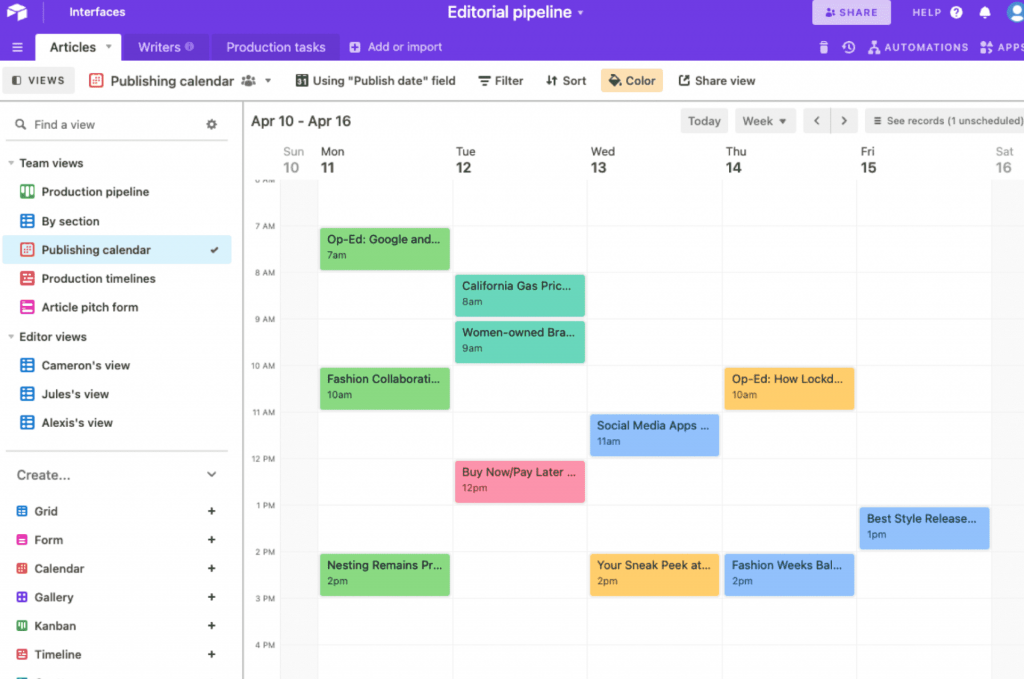
When I discovered Airtable, what immediately stood out was its ability to serve as both a project management tool and a lightweight CRM, all in one platform. During a campaign for a new product launch, I set up separate tables for Clients, Campaigns, Tasks, and Creative Assets, then linked them using Airtable’s relational database feature. This meant that clicking on a campaign automatically showed me the related client, the associated tasks, and the asset library, everything connected rather than siloed.
The content calendar view was particularly useful for the editorial team, and the custom chart and pivot table features gave the marketing director a data-rich view of campaign performance without requiring a separate analytics tool.
Pros:
- Relational database structure for linking campaigns, clients, tasks, and assets in one connected system
- Built-in content calendar for planning, scheduling, and tracking marketing content across channels
- Custom charts, graphs, and pivot tables for analyzing campaign data and KPIs
- Highly flexible field customization to match any marketing team’s unique data structure
Cons:
- Steep learning curve compared to more traditional project management tools
- Free plan is limited to 5 editors, which restricts collaboration for most marketing teams
User Rating: 4.6/5 (G2)
Pricing:
Free plan available (limited to 5 editors). Paid options start at $20/seat/month.
How Did I Evaluate These Tools?
Choosing the tools for this list wasn’t a quick process. I approached the evaluation the same way I’d approach selecting a tool for my own marketing team, with a structured framework and a healthy dose of skepticism toward marketing claims that don’t hold up in practice.
Here are the six criteria I used to assess each platform:
- User Reviews and Ratings: I pulled verified reviews from G2, Capterra, and community discussions on Reddit’s r/DigitalMarketing and r/projectmanagers to understand how real marketing teams experience these tools day-to-day, not just what the product page says.
- Core Features and Functionality: I looked specifically at features relevant to marketing work: campaign planning, content approvals, workload management, reporting, and integrations with tools like HubSpot, Google Analytics, Slack, and Adobe Creative Cloud.
- Ease of Use: A project management tool that requires a two-week onboarding program will simply not get adopted by a busy marketing team. I prioritized platforms that are genuinely intuitive for non-technical users.
- Customer Support Quality: Marketing campaigns don’t wait for support tickets to be resolved. I assessed the quality, responsiveness, and availability of each vendor’s support resources.
- Value for Money: I evaluated pricing against the features you actually get, not just the headline number. Some tools charge per seat for features that others include at the team level, and that matters for budget-conscious marketing departments.
- Personal Experience and Expert Perspectives: Where I’ve personally used a tool, I’ve drawn on that experience directly. Where I haven’t, I’ve relied on detailed accounts from marketing colleagues, community discussions, and verified user reviews to inform the assessment.
See parallels with the best marketing project management software for the best manufacturing project management software. Guide: Best Manufacturing Project Management Software.
My Top 3 Picks for the Best Marketing Project Management Software
After reviewing all 15 tools in depth, here are my personal top picks for marketing teams in 2026, based on real-world usability, marketing-specific features, and overall value.
1. ProProfs Project
If I had to choose one platform for a marketing team that wants simplicity without sacrificing capability, ProProfs Project is where I’d start. It handles everything from campaign task management and Gantt-based timeline planning to time tracking, client invoicing, and performance analytics, without needing a data analyst to interpret the results. It’s especially strong for teams that have outgrown spreadsheets but aren’t ready for enterprise complexity. Its AI-driven setup also means less time spent building out campaign structures from scratch and more time on the strategy the McKinsey research above points to as the real productivity unlock.
2. ClickUp
For marketing teams on a budget, ClickUp is the most capable free option on this list. It centralizes campaign tasks, content resources, deadlines, and goals in one place, and the free plan is genuinely useful, not a stripped-down teaser. Paid plans unlock time tracking, advanced reporting, and integrations that growing teams will use heavily.
3. Asana
Asana earns its place here for how well it handles the strategic layer of marketing management. Portfolio views, approval workflows, campaign templates, and deep integrations with tools like HubSpot, Slack, and Adobe Creative Cloud make it the go-to for marketing directors managing multiple campaigns at once. It’s not the cheapest, but for larger teams, the structure pays off fast.
Support marketing with the best product roadmap software. Recommendations: Best Product Roadmap Software.
How Do Marketing Project Management Tools Work?
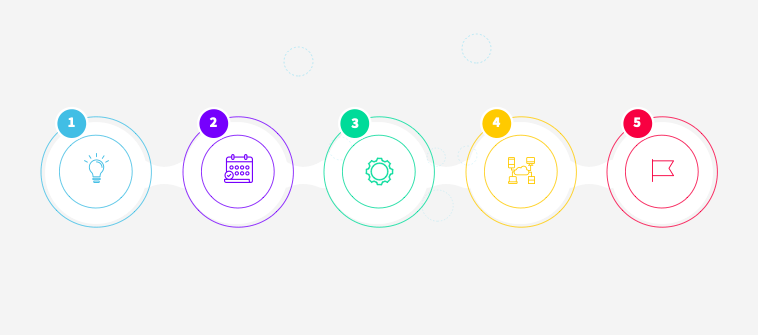
Most platforms follow the same core workflow: five stages that take a campaign from a blank page to a delivered result. Here’s what each stage actually looks like in practice.
1. Plan
Every campaign starts with a planning phase where you define the scope, set milestones, assign tasks to team members, and lock in deadlines. In a good marketing PM tool, this is where you build your campaign structure, whether that’s a Gantt chart for a product launch or a Kanban board for a content sprint. You can set task dependencies (so the designer knows not to start before the brief is approved), assign owners for every deliverable, and attach budgets at the campaign or task level.
If you’re building this structure for the first time, a solid project planning guide can help you think through the right approach before you start configuring a tool.
2. Execute
This is where the day-to-day work happens. Team members pick up their assigned tasks, update their progress, leave comments with questions or feedback, and upload files directly to the task. The best tools make execution frictionless, notifications alert the right person when a task is ready for them, and nothing requires a follow-up Slack message to move forward.
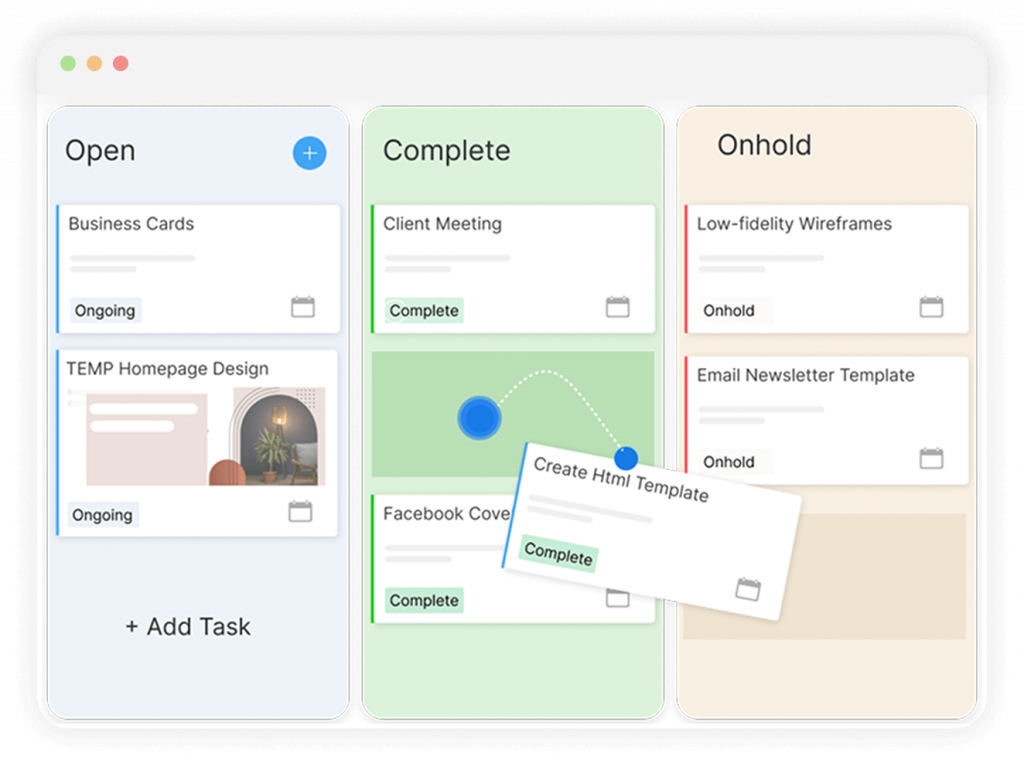
For marketing teams managing cross-functional work (say, a copywriter, a designer, and a paid media specialist all contributing to the same campaign), this stage is where clear task management and ownership pays off the most.
3. Review & Approve
This is the stage where most marketing campaigns get stuck. A piece of content is written, sent over email, marked up by three different stakeholders, and revised four times before anyone officially signs off. In a proper marketing PM tool, review and approval is a structured workflow, content automatically routes to the right reviewer at the right stage, feedback is attached directly to the asset, and every approval (or rejection) is logged with a timestamp.
Tools like ProofHub, Asana, and Wrike handle this particularly well, giving marketing teams a clear audit trail of who approved what and when.
4. Track
Once work is in motion, marketing managers need real-time visibility into what’s on track, what’s at risk, and where the bottlenecks are. Project dashboards do this automatically, pulling together task completion rates, workload management by team member, budget usage, and milestone progress into a single view. This is especially valuable for CMOs and marketing directors who need to report upward, instead of chasing updates from the team, the dashboard tells the story.
Keeping an eye on the right project management KPIs at this stage helps marketing leaders make faster, more confident decisions. Workload management features also flag when specific team members are overloaded before it becomes a missed deadline.
5. Report
The final stage closes the loop between planning and results. Once a campaign wraps, good marketing PM tools let you generate performance reports, how long tasks actually took vs. estimates, where delays occurred, which campaigns ran over budget, and how team time was allocated across projects.
These reports serve two purposes: they give marketing leadership the data they need to justify spend and demonstrate ROI, and they give the team a structured way to improve their workflows for the next campaign.
Choose the Best Marketing Project Management Software and Take Back Control of Your Campaigns
The tools in this guide aren’t just software, they’re the infrastructure that separates marketing teams that consistently deliver from those that are perpetually playing catch-up. When your campaign briefs, task assignments, approvals, and performance data all live in one place, the entire team operates with more clarity, less friction, and better results.
Choosing the right platform isn’t about finding the one with the most features; it’s about finding the one that fits how your team actually works. Start by identifying your biggest operational pain point: Is it approval delays? Lack of visibility? Spreadsheet overload? The answer will point you toward the right tool faster than any feature comparison chart.
For most marketing teams, especially those making the jump from spreadsheets and Slack threads, ProProfs Project offers the clearest path from chaos to clarity. It’s simple enough to adopt immediately, capable enough to grow with your team, and focused enough on marketing workflows that you won’t spend weeks configuring it before it becomes useful.
Frequently Asked Questions
Which tools are best for managing content production workflows?
ProProfs Project, ProofHub, Asana, and ClickUp are particularly well-suited for content production workflows. ProofHub's built-in proofing tools streamline creative reviews and approvals. Asana's template library includes content-specific workflows. ClickUp offers flexible boards for tracking content from draft to publish.
How do marketing teams handle campaign approvals efficiently?
The best marketing project management software includes structured approval workflows where tasks automatically route to reviewers at the right stage. Tools like Asana, Wrike, and ProofHub allow teams to set up multi-stage approvals with clear sign-off visibility, reducing the back-and-forth that typically happens over email.
What project management tools integrate with HubSpot and Google Analytics?
ProProfs Project, Asana, ClickUp, monday.com, and Wrike all offer native or third-party integrations with HubSpot and Google Analytics. These integrations allow marketing teams to connect campaign execution data with CRM and performance data in one view.
How can I reduce delays in marketing campaign execution?
The root causes of campaign delays are almost always unclear ownership, untracked dependencies, and approval bottlenecks. Using a dedicated platform like ProProfs Project or Asana with clearly assigned tasks, deadline tracking, and automated reminders directly addresses these causes. Setting up approval workflows and using Gantt charts to visualize dependencies also helps teams spot potential delays before they happen.
Do marketing teams need specialized project management tools, or will a general tool work?
General tools work up to a point, but marketing-specific platforms provide significant advantages: content calendar views, creative approval workflows, campaign-level reporting, guest reviewer access, and integrations with marketing-specific tools like social media schedulers and email platforms. Teams that have outgrown generic tools consistently report faster campaign execution and better cross-team visibility after switching to a marketing-focused solution.
Which tools are best for managing cross-channel marketing campaigns?
monday.com, Wrike, and ProProfs Project are strong choices for cross-channel campaign management. All three offer multi-project dashboards, resource management features, and the ability to track work across different campaign tracks like paid media, content, social, email within a single view.
What is the best project management software for small digital marketing agencies?
Productive is purpose-built for agencies and includes financial management alongside project management, making it ideal for small agencies that need profitability visibility. For purely project-focused needs, ProProfs Project offers a strong feature set at a competitive price point without the complexity of enterprise platforms.
FREE. All Features. FOREVER!
Try our Forever FREE account with all premium features!